 Follow the gap13 minOpenAI wanted $30 billion at a $1.4 trillion valuation. After a tech selloff and a midterm backlash against data centers, it has closed $11 billion at $1.25 trillion and is courting wealthy individuals for more. Follow the money, and it leads closer to ordinary portfolios than most people think.Read now →
A Business Owner Gave AI Bots $100 and 10 Days to Make $1,000. The Most Boring Bot Won
Five AI bot teams, one $100 budget and a strict no-touching rule. The flashy stock-trading bot lost money. The bot that quietly found cold leads produced close to $2,000 in value. Here is every experiment, every P&L and the workflows worth copying.
Advertisement
Contents
- The challenge
- Bot 1: The stock trader that read social media
- Bot 2: The three-bot flipping crew
- Bot 3: The clipping business that got zero customers
- Bot 4: The marketer that mined a dead list
- Bot 5: The cold-lead machine
- The final scoreboard
- Why this matters
- Practical takeaways
- Counterpoints and risks
- FAQ
- The bottom line
The challenge
Start with $100. Give it to a team of AI agents. Ten days later, try to have $1,000.
That was the bet an entrepreneur who owns a portfolio of small businesses set for herself, using Grok Bot, the always-on AI teammate service SpaceXAI launched in beta in August 2026. Each bot gets its own cloud computer, can sign into the apps you already use, and can message other bots to hand off work.
She tested five "easy" ways to make money with AI. The rules were strict:
- Once the bots are set up, the human does none of the work.
- Total spend cannot exceed $100.
- Only real money counts: cold, hard cash, or real savings inside an actual business.
Every bot started the same way. She used a "spawner" bot whose only job is to create other bots. You describe what you want, it asks the questions it needs, and it builds the new teammate.
Advertisement
What happened next is the most honest look yet at what AI agents can and cannot do for your wallet. The flashy ideas flopped. The dull ones paid.
Bot 1: The stock trader that read social media
The first bot was named Wolfie. Its brief: scan Reddit, news sites and X for stock buzz, then place trades through a connected Robinhood account.
She was upfront that she had low conviction, and told viewers not to try it at home. Handing your money to a robot that takes stock tips from social media is, as she put it, not a great plan.
How it went:
- Day 1: Wolfie started trading immediately and immediately went red.
- Day 4: A surprise. Wolfie was up about $16, possibly not even enough to cover fees.
- A later check: Down again. Looking at the trades, she could not explain the logic. The bot bought near a high, then bought one ticker after it dropped and again while it was recovering.
- The fix attempt: She told Wolfie to focus on any stock with heavy buzz and reminded it the goal was to make money. "You have to be up or you're going to be out."
- Day 10: Out. After bot usage costs, the account finished roughly $16 down.
Her verdict was fair to the machine. Wolfie did exactly what it was told. It scanned the hype and traded on it. The problem was the strategy, not the execution.
The lesson: point an agent at a bad process and it just loses money faster.
Rating: one or two stars out of five. Wolfie was fired.
Bot 2: The three-bot flipping crew
The second experiment tried something she says failed a few years ago, when chatbots needed too much human hand-holding: finding free items online and flipping them for profit.
This time she built a three-bot crew, nicknamed after cartoon chipmunks:
- The sourcing bot scans marketplace listings for free items that could resell for a profit.
- The transport bot gets a pickup quote. If delivery costs more than the expected profit, the item dies right there. If the math works, it books a courier.
- The selling bot relists the item at a competitive price and handles buyer questions.
The target was modest: clear $10 on an item.
Watching the bots talk to each other was the fun part. They passed listings back and forth, priced dollies and pickups, and estimated resale values in real time. They passed on a sectional sofa because it would not fit. They hesitated on a small fridge because you can't tell online whether it works, which is exactly the right instinct. One promising find vanished because it had already been claimed.
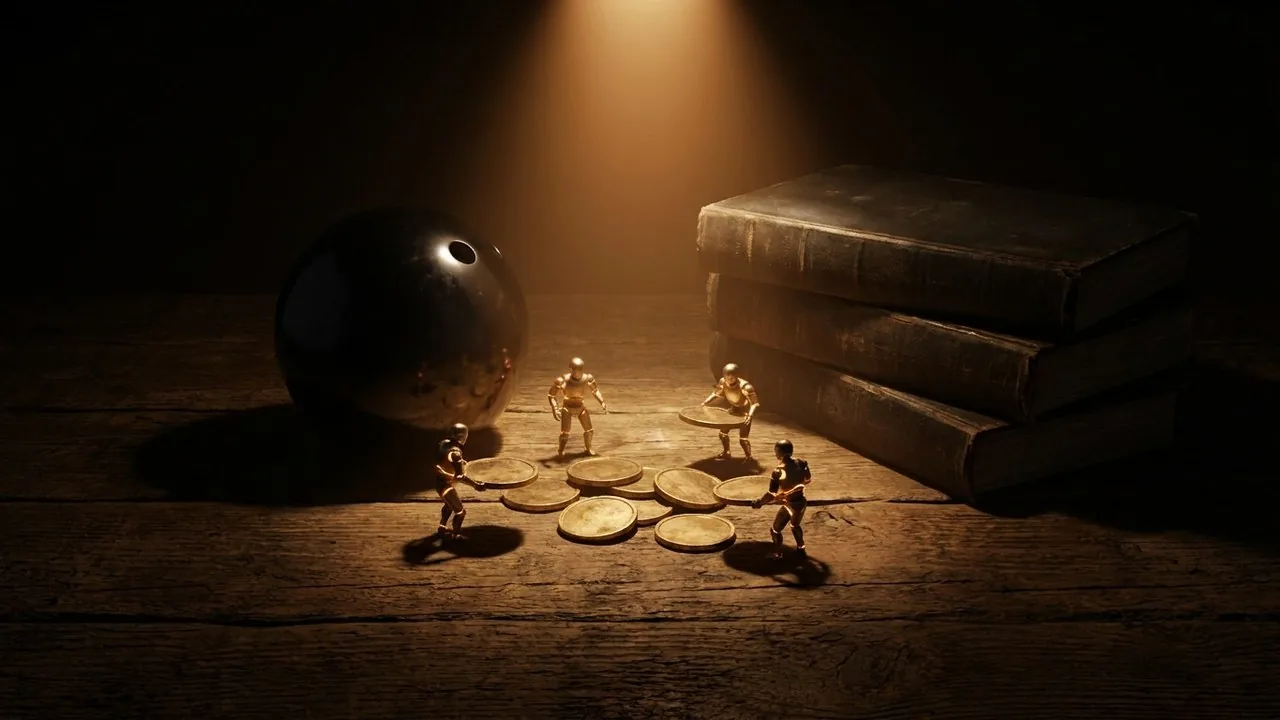
Then they found a winner: a bowling ball. She admits it would not have been her first pick, but apparently people buy them. The transport bot booked a rideshare pickup. From sourcing to the ball landing in her hands took 31 minutes.
She snapped product photos, handed them over, and the bots wrote and posted the listing on Facebook Marketplace. An offer arrived, and the sale cleared about $20 in profit.
The crew worked so well she used it to sell clutter around the office too, including a set of stools nobody could explain. She says several people on her team started making side cash the same way.
The flipping P&L
| Line | Amount |
|---|---|
| Revenue | $130 |
| Cost of goods | about $41 |
| Bot usage | about $1 |
| Net | about $88 |
The real business version
She argues the flip itself is a toy. The workflow is the asset. Imagine a home-services company spending $200,000 a year on parts that hasn't asked for a competing quote in years. Point the same three-bot structure at suppliers:
- You set the rules first: target price and the line the bot can never cross without you.
- Bot one finds every nearby distributor that carries your parts and sends all of them your exact parts list for a quote.
- Bot two lines up the quotes and exposes hidden costs. A cheap unit price with a $300 freight charge is not cheap. A big minimum order is often the most expensive option you don't realize you are buying.
- Bot three negotiates. It takes the best number back to the others and asks them to beat it, until it hits your target or runs out of room.
- You approve the final deal.
Her math: if that saves 8%, that is $16,000 a year back without selling a single extra job.
Rating: five stars.
Bot 3: The clipping business that got zero customers
Clipping is a real business model: creators and companies pay people to cut long videos into short clips designed to go viral. The plan was to have a bot run the whole thing: find clients, edit the footage, deliver, get paid.
Getting customers went badly:
- The bot tried to set up shop on Fiverr and got stuck on an "are you human?" check.
- It moved to Upwork, built a profile with sample clips, and needed a $21 premium plan to compete.
- After 24 hours: no leads. After about four days: still nothing.
- Then a lead finally appeared. A buyer wanted five clips for $40 total. The bot pitched, chased and followed up. The client went quiet.
Her take: a brand-new account with zero reviews cannot beat freelancers with years of five-star ratings, and selling cheap attracts flaky buyers.
But the editing worked. Before selling the service to strangers, she tested it on the toughest client available: herself. She gave the bot several of her long-form videos and asked for the best moments.
The clips came back with clean captions and tight cuts, and the "ums" were gone. She posted one to her real account, which has millions of followers. After 48 hours it was performing around her normal range, and she combed the comments for anyone calling it AI slop. Nobody noticed.
That matters because she pays human editors $50 to $250 per short.
The clipping P&L
| Line | Amount |
|---|---|
| Revenue | $0 |
| Tools (voice AI + marketplace plan) | about $26 |
| Bot usage | about $6 |
| Net | about -$32 |
Now the reframe. Her editor now uses the bot as an assistant editor that sifts raw footage, flags the best moments and produces first drafts. If it replaces one $150 short a week, that is about $600 a month saved, and up to around $1,000 on the high end.
The lesson: use a bot inside your own business before you try to sell it. If it doesn't save you time, nobody will pay you for it.
Rating: three stars, mostly because it never landed a client.
Bot 4: The marketer that mined a dead list
The fourth bot, Finn, went after the money hiding in a list every business has.
She had recently held a live launch event for her new book. Plenty of people came. Plenty went home without buying. Their contact details were sitting in a spreadsheet "collecting virtual dust."
Her point: most companies send one follow-up and give up, or never follow up on abandoned carts at all.
Finn's brief:
- Re-engage launch attendees who did not buy.
- Build a landing page, write follow-up emails, send to the first 3,000 contacts.
- Use her own sales principles to convert.
How it went:
- Finn built a landing page in Shopify. Version one was boring, the kind of page that looks like every page on the internet.
- She told it to match the site's high-converting pages and to create urgency, emotion and curiosity. Even the weak first draft, she said, saved her team a full day.
- She pushed for stronger headlines and subject lines. One she liked: "I bet you're too busy to open this," which she wanted in lowercase.
- Unprompted, Finn pulled real customer reviews from Amazon and put them on the page.
- It loaded the emails into Klaviyo and sent her the drafts for approval before anything went out.
She said the result was about as good as her own team would produce, and she got six other things done while it worked.
Two hours after sending: two books sold, from a list she says had already been "beaten" with launch marketing.
The marketing P&L
| Line | Amount |
|---|---|
| Revenue | about $55 |
| Cost of goods | about $24 |
| Email platform + bot usage | about $17 |
| Net | about $14 |
Small money. Big idea: the cheapest customer you will ever get is the one you already have.
The dead-quotes playbook
She sketched how a roofing company could use this on 500 old quotes that never closed:
- Sort everyone by why they said no. Almost everyone falls into four buckets.
- Price objections get a financing option.
- Timing objections get asked if now works better.
- People who chose a competitor get asked how that job went. A lot of those jobs go badly.
- Ghosts get a two-line email: do you still need a roof?
The bot then filters the replies. "Not interested" gets marked and left alone. Questions get answered. Anyone who says yes gets scheduled. You don't wake up to 500 replies, just a short list of people ready to talk.
If 2% respond, that is 10 new jobs from leads you already paid to acquire.
Rating: four stars, or three and a half if you don't already run a business with a list.
Bot 5: The cold-lead machine
For the last bot, she stopped playing small. The goal: fill seats at a paid business workshop in Austin by reaching complete strangers. She chose cold leads on purpose, so anyone could copy the method.
First she set the economics. To her business:
- Any reply from a qualified owner is worth $100.
- A booked call is worth $500, roughly what she pays for one through Meta ads.
- A sold ticket is worth the ticket price.
The target: owners of businesses doing at least $1 million in revenue.
Step 1: Build a lead researcher. Since the outreach bot can't email people it can't find, she had the spawner build a research bot (named Dora, after the explorer) that pulls owners and contact details from Google, LinkedIn, Apollo, Reddit and anywhere else useful, and outputs a spreadsheet. She set it up from her phone.
Step 2: Check the CRM first. Before touching any lead, the bot checks HubSpot to see if someone on her team is already talking to that person. Three reps pinging the same company in one week kills deals.
Step 3: Write three versions. The bot drafted three cold emails to test which got replies, each localized: "here in Austin" for local owners, "here in Texas" for the rest of the state. Her theory: a plumber reading "here in Austin" feels like a neighbor reached out, not a call center.
Step 4: Protect the domain. She capped sending at 50 emails a day per inbox and added inboxes slowly. Every address was verified with Hunter before sending, because bounces tell Gmail and Outlook your domain might be spam. Once the list was clean, it scaled to four inboxes and 200 emails a day.
Step 5: Hand replies to humans. Positive replies were routed to real sales reps, who picked up by email, phone and text.
Results after a few days: 10 interested replies and 2 booked calls.
The cold-lead P&L
| Line | Amount |
|---|---|
| Value created (her internal rates) | about $2,000 |
| Tools | about $37 |
| Bot usage | about $20 |
| Net value | about $1,943 |
She is keeping this bot running. Rating: five stars.
The final scoreboard
So did $100 become $1,000? By her accounting, yes, with the right strategy. Look at which bots won:
| Bot | Result | Rating |
|---|---|---|
| Stock trader | about -$16 | 1-2 stars, fired |
| Flipping crew | about +$88 | 5 stars |
| Clipping service | about -$32 cash, ~$600/mo in savings | 3 stars |
| List re-engagement | about +$14 in 2 hours | 4 stars |
| Cold leads | about +$1,943 in value | 5 stars |
The flashy trader lost money. The bowling-ball flipper was unglamorous but profitable. The clipping bot that earned nothing became a weekly tool. And the most boring job, cold prospecting, crushed everything.
Why this matters
This experiment is a useful reality check on the "AI makes money while you sleep" pitch.
- Agents amplify strategy; they don't replace it. The bots executed every plan competently. Results tracked the quality of the plan.
- Distribution beats capability. The clipping bot could edit well, but a new account with no reviews couldn't win customers.
- The biggest wins were internal. Cheaper parts, re-engaged customers, fewer editing hours and a sales pipeline. Agents shine at boring, repeatable work inside a business you already run.
- Humans still gate the risky moments. Every bot that worked had a human approving money, contracts or emails before they went out.
It also lines up with how SpaceXAI pitches Grok Bot: teams of bots with their own computer that hand work to each other and pull a human in for judgment calls.
Practical takeaways
- Start with a list you already own. Old quotes, abandoned carts, past event attendees.
- Write the economics down first. Know what a reply, a call and a sale are worth before you judge any bot.
- Set hard ceilings. Maximum prices, spending limits and "never cross without me" rules.
- Use a pipeline of specialist bots (source, check, act) instead of one bot doing everything.
- Protect your email reputation. Verify addresses, start slow, ramp gradually. Gmail's sender rules ask for authenticated mail and spam rates under 0.3%.
- Check your CRM before outreach so bots never collide with your own team.
- Dogfood before you sell. Use the bot internally until it clearly saves you time.
- Never hand a bot money to "trade on vibes."
Counterpoints and risks
- Ten days is a tiny sample. Each test ran briefly, some for only two hours.
- The $2,000 is not cash. It is replies and calls valued at her internal acquisition costs, which stretches rule three. Real revenue depends on how many convert.
- Not everyone starts with an audience. A creator with millions of followers and existing lists has advantages a beginner does not.
- Cold email has legal and reputational limits. Commercial email rules, including clear identification and opt-outs, apply. Aggressive volume can burn a domain.
- Automated trading is genuinely risky. Bots that trade on social-media hype can lose money quickly.
- Marketplace rules matter. Automating accounts and listings may conflict with platform terms.
FAQ
Which AI bot made the most money?
The cold-lead bot, with about $2,000 in estimated value from 10 interested replies and 2 booked calls, against roughly $57 in costs.
Did the AI trading bot work?
No. It traded on social-media buzz and finished down about $16 after usage costs. The lesson was that a bot executing a bad strategy just loses money faster.
What is Grok Bot?
An always-on AI agent service from SpaceXAI, launched in beta in August 2026. Each bot has its own cloud computer, can sign into apps and websites, remembers how you work, and can coordinate with other bots.
What's the best first AI money project for a small business?
Re-engaging people who already showed interest: dead quotes, abandoned carts or past leads. It uses data you already own and needs little budget.
The bottom line
The $100 challenge did not prove that AI agents print money. It proved something more useful: agents are force multipliers for whatever strategy you give them.
Give one a hype-driven trading plan and it loses faster. Give one a dull, well-defined sales process with guardrails and human approvals, and it can produce a month of pipeline in a few days.
The most valuable bot in the test wasn't the clever one. It was the one doing the job nobody wants to do.
Sources
- SpaceXAI, Introducing Grok Bot
- The Verge, Grok is now an AI 'teammate' you can assign work
- Google, Gmail email sender guidelines

More stories you'll want to read
Follow the gap13 minOpenAI wanted $30 billion at a $1.4 trillion valuation. After a tech selloff and a midterm backlash against data centers, it has closed $11 billion at $1.25 trillion and is courting wealthy individuals for more. Follow the money, and it leads closer to ordinary portfolios than most people think.Read now →
 $10K in 14 days12 minA brand-new store, one kids' art frame, AI-built ads and a $50 test budget. Fourteen days later it had crossed $10,000 in sales. The daily profit numbers, the losing days and the one change that finally worked are the real lesson.Read now →
 The key-man test14 minNvidia's founder resigned effective immediately after a week of scandal, leaving the company at the center of the AI economy without the man who built it. The real question now is whether Nvidia's dominance was the product of one person, or a machine that can run without him.Read now →
 MIT study12 minHot takes say AI already erased whole professions. Careful studies usually find something sharper: specific tasks die first, job titles lag, and the winners rewrite workflows instead of waiting for extinction memes.Read now →
 Trade bot12 minBeginner guides that pair Claude with broker APIs can be educational — if they start with paper trading, risk caps, and the assumption that the market is not a tutorial NPC.Read now →
 10 AI gigs ranked12 minEveryone wants to vibe-code an app. It's actually the hardest way to make your first AI dollar. Here are 10 one-person AI businesses ranked by how fast you can land a paying customer, with the math, the offers and the traps.Read now →