 Three-file agent13 minAn inbox agent that labels every email and drafts replies in your voice, built in plain English inside Claude Code and then put on an hourly cloud schedule. Here's the four-level method, the three files that make it work, and the safety settings you shouldn't skip.Read now →
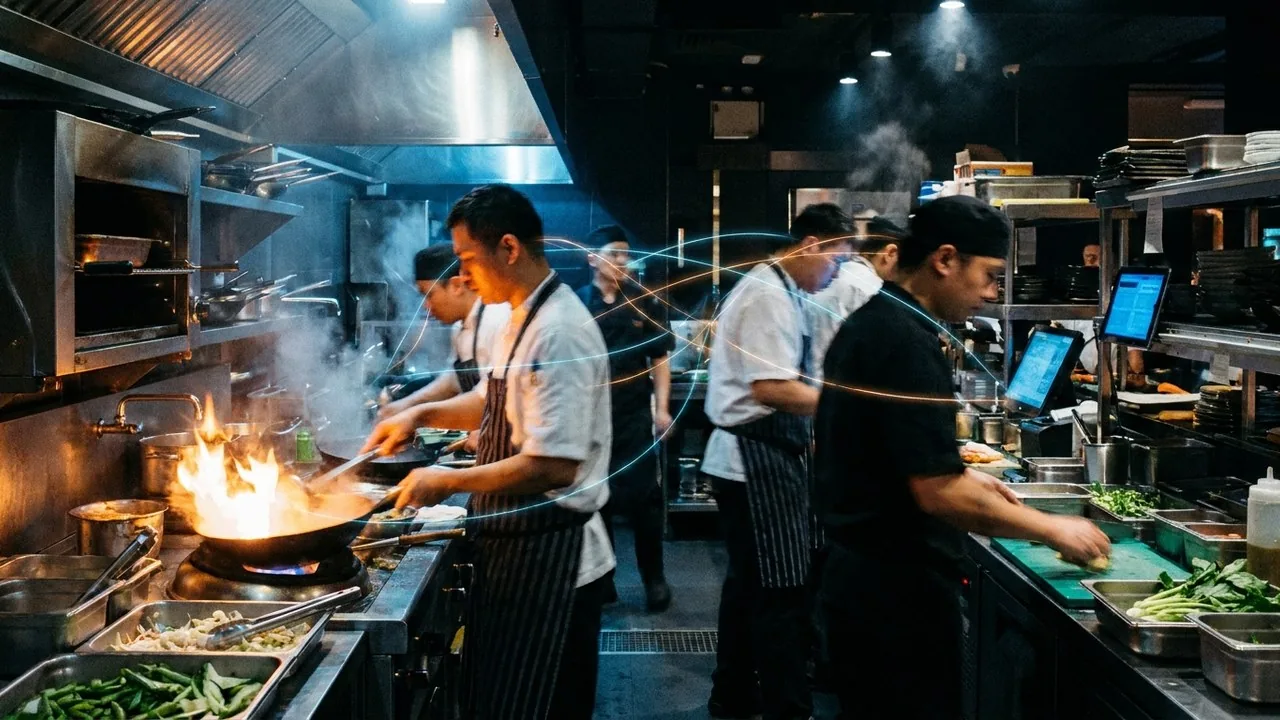
A Boston Restaurant Asked Its AI How Yesterday Went. The Answer Shows Why Kitchens Need Multiplayer AI
Restaurants are a team sport, but most AI is built for one person typing into one box. Inside the push to build AI that a whole crew can use, plus a voice demo, an employee-birthday agent and some unusual ideas for how restaurants could make more money.
Advertisement
Contents
- The voice in the walk-in
- Why AI has not helped restaurants yet
- Context beats model choice
- All-in-one vs platform
- The single-player problem
- What a restaurant AI teammate does
- Agents that book your whole trip
- The friction debate
- How restaurants could make more money
- Why this matters
- Practical takeaways for operators
- Counterpoints and risks
- FAQ
- The bottom line
A restaurant owner holds up his phone and asks a simple question: how did Fenway do yesterday?
A calm voice answers. About $11,500 in sales, down 17% from the same day last week. Breakfast and a large hospital takeout order carried the day. The new wines by the glass rolled out well. Anything more specific?
He asks about labor. Hourly labor came in at 16% of sales, well under the 31% target. Sales per labor hour: about $86. He asks how last Monday compared. About $2,200 in hourly labor, also about 16%.
Then he asks it to remind him to thank one of the front-of-house leads and his team.
Advertisement
No dashboard. No spreadsheet. No logging into five systems. This is what AI in a restaurant can look like when it finally works, and it explains why one operator thinks the next big leap in AI is not a smarter model, but a multiplayer one.
The voice in the walk-in
The owner is Eli Feldman, co-owner of the Boston restaurant Shy Bird, which has locations including one near Fenway. He also founded Colette, an AI platform for restaurants that was built and tested inside his own kitchens before being offered to others.
The name comes from Colette Tatou, the tough rôtisseur in Pixar's Ratatouille who keeps the kitchen running. NBC Boston reported in June that about three dozen restaurants were using the platform.
Feldman's pitch is not replacing staff. As he told NBC Boston: "Our team plus AI is going to be way better than just AI by itself, and hopefully incrementally better than just our team by themselves."
His sharper line is the one that frames everything else: restaurants are a team sport, and AI to date has been a single-player game.
Why AI has not helped restaurants yet
Here is the uncomfortable truth operators keep saying out loud: for most restaurants, AI has not made the job feel easier.
"As a restaurant operator, it does not feel easier," Feldman says. "It does not feel in any way that the value of these tools [is there] yet."
Several reasons come up again and again:
- Restaurants are physically hard. A steak still takes as long as it takes. A cook still calls out sick. Only so many people fit on a line. Software cannot remove that.
- The margins are brutal. The National Restaurant Association reports median pre-tax margins of about 2.8% for full-service and 4% for limited-service restaurants. Saving half a point on food and labor might move a restaurant from 4 cents on the dollar to 5. That is a 25% jump in profit, but it is still 5 cents.
- Most tools focus on cutting costs. There is far more software for reducing waste and trimming labor than for helping restaurants earn more.
- The workforce is mobile. People in kitchens and dining rooms are on their feet, hands full, rarely sitting at a desk.
That last point is why Feldman argues that office tools do not translate. A popular workplace chat app came up on a recent industry panel; half the room of restaurant operators had never used it and did not want to.
Context beats model choice
At industry events, the most common question operators ask is: which AI should we use? Claude? ChatGPT? Gemini?
The answer from builders in the space is surprisingly consistent: it matters less than you think. The leading models keep leapfrogging each other, and even open models are now good. What separates good answers from bad ones is context.
The advice:
- Store your restaurant's knowledge where AI can read it. That means SOPs, recipes, vendor lists, culture docs and training material, in plain files such as Markdown or a shared library.
- Keep learning, because tools change monthly.
- Consider pairing a fast model for instant answers with a slower, deeper model working in the background, the way humans pair quick instinct with careful thought.
Feldman adds a trick: invite several models into the same decision, give each a different perspective, let them argue, and then act as the final judge.
Adoption is already further along than many think. Restaurant-tech founders say they rarely meet operators who only use AI to fix their grammar anymore. At one Bay Area panel, one operator ran his restaurant's AI from a Mac Mini sitting on top of the walk-in, using open-weight models he tuned himself with Square as his point-of-sale. Another was all-in on frontier models through a coding agent. Elsewhere, an owner forwards invoices to a chat bot so he can ask questions like how much Michelob he bought last month.
Is that the most elegant setup? No. Does it solve a real problem? Absolutely.
All-in-one vs platform
Another fight playing out across restaurant tech: should one company run everything?
The critique from builders is sharp. An all-in-one system means you are beholden to one vendor that can raise prices, remove features or hold your data. A true platform, by contrast, lets many tools plug in and share data.
Most office software works this way. A typical tech company runs a CRM, an accounting tool, a database and a chat app that all connect easily. Restaurant software rarely does. Point-of-sale giants offer marketplaces, but integrations can be expensive and data hard to extract.
Why? One theory: the US restaurant industry is huge in sales, but small as a software market, which pushes vendors to squeeze more revenue from each customer. Venture capital makes it worse. A fund that invests $300 million expects a $3 billion exit, and very few restaurant-tech companies can reach that. A profitable, slower-growing company might be healthier for restaurants than one chasing hyper-growth.
Feldman calls the limits partly a "lack of imagination." He points out that restaurants touch far more of the economy than their own sales: suppliers, workers, commercial real estate and the ground floor of nearly every city block. By one rough count he cited from asking a chatbot, restaurants have far more physical locations in the US than any other industry. He frames them as the business that "stitches together the physical world."
The single-player problem
Today's AI is overwhelmingly one human talking to one assistant. The new wave of personal agents adds a twist: one human directing many bots.
Restaurants need a third mode: many humans and many bots, working together.
Feldman says he did not fully realize this until he started building. A kitchen is a chef, sous chefs, line cooks, servers, managers, bookkeepers and owners, each with different questions and access. An AI that only serves one person at a desk misses most of the team.
That is the bet behind Colette. It combines:
- A team chat layer, built for people who are always moving
- A file library with the restaurant's SOPs and culture, so AI answers sound like this restaurant
- Connections to the tech stack, including sales, labor and recipe-costing data
- An agent platform where anyone on the team can build agents
He describes it as a frontier model "with an apron and a chef coat on," thinking about restaurants all day.
What a restaurant AI teammate does
The demos are where it gets concrete.
Voice operations
In the Fenway example, the AI pulls sales, compares days, explains drivers like a big takeout order and calculates sales per labor hour on request. It knows the labor number covers hourly staff only, not salaries. A recent update lets staff use a phone's quick-action button like a walkie-talkie.
Forecasting with humans in the loop
NBC Boston described one case where the system forecast $12,500 in daily sales, then asked the team to weigh in. Staff predicted $15,500, and the restaurant beat that. Feldman's point: "Colette knows everything except what we know." It did not know thousands of soccer fans were about to march past.
The birthday agent
One agent's only job is to make sure nobody on staff ever has a birthday or work anniversary forgotten. It is small, and that is the point. AI can make work feel more human, not just cheaper.
Costing recipes with an outside agent
Feldman gave his own personal AI agent an account on the team platform. He asked it to cost out two menu items. It pulled from the restaurant's recipe data and came back with a question: there is an expensive olive oil and a cheap one in the system, so which does this recipe use?
That is exactly the kind of judgment call a good sous chef would raise.
A replay of the day
The team built a "replay mode" that plays back an entire day of sales, labor check-ins and kitchen-screen activity like a time-lapse. It grew from a simple question: what would a restaurant simulator look like? Feldman suspects some of these tools will end up more useful to AI agents than to humans.
Respecting deep data
Building the platform also taught him humility. When his team tried to model recipes themselves, prep actions on a single lemon, from zesting to juicing with different yields, convinced them to plug into dedicated recipe-costing software instead. Recipe data, as one founder put it, is "a couple hairs away from impossible" to get right, which is why many restaurants give up on accurate costing.
New org charts
Feldman's open call to the industry: someone needs to design new org charts for restaurants that include both people and agents. Which agents support which roles? Who reviews their work? He does not think one software company should decide that alone.
Agents that book your whole trip
The wider shift is easy to see outside restaurants, too. One restaurant-tech founder described asking his personal agent to plan a conference trip to Las Vegas. Because it had his travel preferences, it booked flights, a hotel with a gym, and car service to and from the airport.
It also noticed it needed a way to place phone calls, recommended a voice-calling tool he had never heard of, said each call would cost about 42 cents, and set it up. The whole thing took about five minutes. Another agent bought prescription glasses from a photo of the prescription.
A manager on his team who struggled with AI had a breakthrough when he realized: "I'm a really good manager... Now I have these bots and I just manage them." He did not need to speak tech, just delegate clearly.
That is the mindset restaurants need. Good managers already know how to give clear instructions and check work.
The friction debate
Not everyone is sure frictionless is good.
Feldman argues complexity is not eliminated, it is moved, often somewhere harder to see. Cheap, easy travel has costs to the planet. Social media taught us about side effects only in hindsight. He thinks builders should decide where to intentionally reintroduce friction to keep people engaged and resilient.
He worries about the guest side, too. If every app delivers instantly, will people lose patience when the kitchen takes 22 minutes? He admits to his own frustration when a delivery promised for 7:46 showed up at 8:40, ice cold.
The optimist's reply: delivery promises are nothing new, and people may become more understanding of physical limits. Some parents are already balancing screens with time outdoors, like a school nature garden where kids grow food with their hands. Both sides agree on one thing: the good outcome is not automatic. Builders have to choose it.
How restaurants could make more money
If cost-cutting alone will not save restaurants, where can new revenue come from? Several ideas came up, some practical and some speculative:
- Restaurants as workspaces. Shy Bird's "Work from Shy Bird" program adds a thin office layer, including monitors and adapters, so people can work from the restaurant instead of home.
- Connection as a product. Its "Don't Be Shy" dinner series is inspired by Enlightenment-era salons. The first, "Natural and Artificial," paired a discussion of AI with natural wine for about a dozen strangers, from city housing staff to tech workers. The challenge is scaling past one table without losing the energy. The goal is one a month.
- Sponsorship. Feldman has pitched large tech companies on sponsoring the work-from-restaurant program and reached second meetings with two. Others suggest sponsored private dining rooms, like sponsored conference panels.
- Product placement. Restaurants already showcase olive oils, butter, glassware and spirits. Brands might pay for that attention. One catch: alcohol deals are heavily regulated, and collective negotiating on liquor is restricted in many states.
- Micro-grocery. A wild idea: restaurants storing a small set of top grocery items so neighbors could grab them in minutes.
Feldman's framing: a successful restaurant has built a community, and a community is attention. The problem is bandwidth. No manager has time to run brand partnerships, but an agent could talk to a brand's marketing team.
Why this matters
Restaurants employ roughly one in ten American workers, as Feldman notes, and run on thin margins. If AI only shows up as cost-cutting, the industry gets a little more efficient and stays fragile. If AI helps teams communicate, forecast, train and find new revenue, it could make the jobs better and the businesses sturdier.
The broader lesson applies far beyond food. Most real work is done by teams of people with different roles, not one person at a laptop. The next wave of workplace AI will be judged on how well it serves the group.
Practical takeaways for operators
- Build your context library. Write down SOPs, recipes, vendor details and house style in one place AI can read.
- Start with small, annoying tasks. Invoice questions, prep lists, scheduling reminders and birthday tracking deliver quick wins.
- Keep humans in forecasts. Let AI propose numbers, then ask your team what it does not know.
- Prefer open systems. Choose tools that let you export data and connect to others.
- Think beyond cost. List the assets you already have, such as space, community, attention and expertise, and ask how AI could help monetize them.
- Pick tools built for standing workers. Voice and mobile matter more than a desktop dashboard.
Counterpoints and risks
- Data quality limits everything. AI answers are only as good as the recipe, labor and sales data underneath. Many restaurants do not have accurate costing.
- Privacy and trust. Agents with access to schedules, pay and performance data need clear rules about who can see what.
- Vendor hype. Demos run smoothly; real kitchens are chaotic. Ask for references from similar restaurants.
- Speed. Voice AI that pauses to crunch data can be awkward mid-service.
- Job anxiety. Even "augmentation" tools change roles. Operators should be honest with staff about what AI will and will not do.
FAQ
What is Colette?
An AI platform for restaurants founded by Boston restaurateur Eli Feldman. It combines team communication, a document library, connections to restaurant systems and an agent builder, and it was developed inside his Shy Bird restaurants.
What does "multiplayer AI" mean?
AI designed for groups of people and multiple agents working together, rather than one person chatting with one assistant.
Which AI model is best for restaurants?
Builders say the top models are close. The bigger difference comes from giving AI good context about your restaurant, such as SOPs, recipes and data.
Can AI fix restaurant profitability?
Not alone. Optimizing food and labor helps, but operators argue restaurants also need new revenue ideas, from workspaces to events and sponsorships.
Will AI replace restaurant workers?
Operators building these tools say the goal is reducing back-office work so staff can focus on guests. Restaurants remain physical and human-heavy.
The bottom line
The most telling moment in the Fenway demo is not the sales number. It is the last request: remind me to thank the team.
That is the version of restaurant AI worth building, one that handles the numbers so humans can handle the people. Restaurants have always been a team sport. The AI that wins in kitchens will be the one that finally learns to play on a team.
Sources
- NBC Boston, This new restaurant AI platform aims to save time without replacing workers
- The Boston Globe, The most crucial employee at Boston's Shy Bird isn't human. She's AI
- Hngry, Demo: Colette builds the operator-first "system of intelligence" for restaurants
- National Restaurant Association, Restaurant sales volume revised lower based on benchmarked government data
- National Restaurant Association, State of the Restaurant Industry 2026

More stories you'll want to read
Three-file agent13 minAn inbox agent that labels every email and drafts replies in your voice, built in plain English inside Claude Code and then put on an hourly cloud schedule. Here's the four-level method, the three files that make it work, and the safety settings you shouldn't skip.Read now →
 The $1T solo company15 minVercel's founder says one person with a fleet of AI agents can already do the work of hundreds or thousands of people, and he hopes to see a single-person trillion-dollar company. Here is the full playbook behind that bet, from deleting agent-hostile software to treating your own agents like employees who ask for budget.Read now →
 Your AI chief of staff13 minA solo creator runs his whole business and a chunk of family life on a stack of reusable AI skills and scheduled bots that work in ChatGPT, Claude and Grok Bot alike. Here's every piece, how to build simple versions yourself, and the one rule that keeps it from turning into slop.Read now →
 Muse gets Spaces12 minMeta just gave its Muse agent three upgrades in one week: Spaces that turn a sentence into a self-updating mini app, real-time voice calls, and memory and focus features that used to sit behind a paywall. Here's what they do, a hands-on style walkthrough, and the catches.Read now →
 Life agents12 minWork bots get the hype. Life bots pay the rent on your attention: health, home, finances, learning, and relationships — each with their own tools and boundaries.Read now →
 Agent moment12 minThe models could already act. What was missing was an interface normal people understand — always-on teammates with their own computers, messaged like coworkers.Read now →