 Testing AI ads11 minA boxing machine for kids, a ride-on off-road car, a 24-bag snack box, hair-regrowth shampoo, a wall-climbing car and a three-strawberry smoothie blender. One creator bought products pushed by AI-generated social ads and tested every claim. The results were not what anyone expected.Read now →
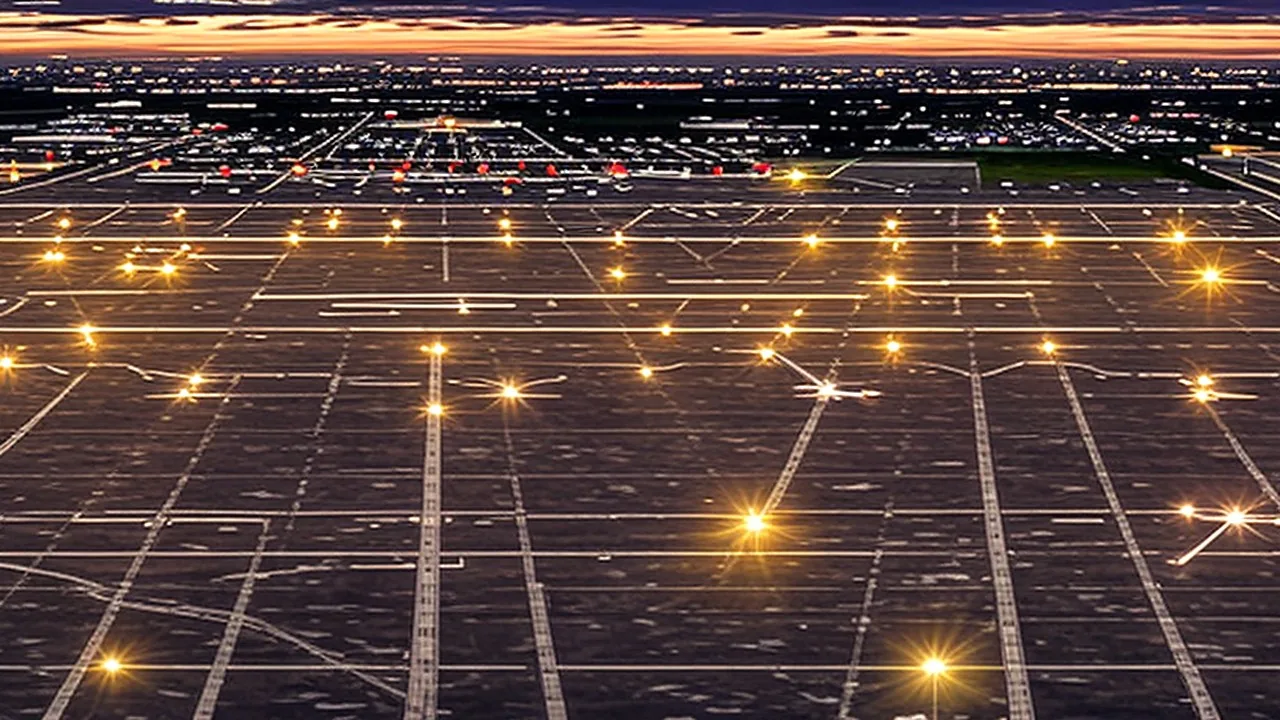
America's Skies Went Dark for Four Hours. The AI Everyone Blamed Wasn't Even Plugged In
A rare nationwide ground stop hit three days after the FAA's new $875 million AI routing tool went live in all 22 en-route centers. The internet pointed at the AI. The FAA's own account points at a router in Arkansas and 40-year-old copper. Here's what actually broke, and why the suspicion still matters.
Advertisement
At about 3:30 p.m. Eastern on Friday, November 13, the United States did something it almost never does. It stopped flying.
The Federal Aviation Administration ordered a nationwide ground stop "due to extraordinary circumstances and for reasons of safety." Departures froze from Boston to Seattle. Roughly 3,500 aircraft already in the air were brought down safely. By that evening, thousands of flights had been canceled and more than ten thousand delayed.
And within minutes, a theory was racing across social media: it was the AI.
The timing looked damning. Just three days earlier, the FAA had switched on a brand-new artificial-intelligence routing tool in every one of its 22 en-route air traffic control centers. A shiny new AI goes national on Tuesday. The entire airspace collapses on Friday. What else could it be?
Advertisement
As it turns out, almost certainly something far more boring. But the way this story unfolded, and how fast the AI became the default suspect, tells you a lot about where public trust in AI stands right now.
The four hours, in order
Here's the timeline, pieced together from the FAA's own account and the reporting that followed:
- ~3:30 p.m. ET: The FAA experiences what it calls a "technical problem" and issues a nationwide ground stop.
- 4:16 p.m.: Transportation Secretary Sean Duffy posts that the order followed "a communication issue impacting all Air Route Traffic Control Centers."
- 5:34 p.m.: The company behind the new AI tool posts a denial on X while the stop is still in effect.
- Early evening: Homeland Security Secretary Markwayne Mullin tells reporters it was a "telecommunications outage" and that there's no indication of a "nefarious attack." Asked directly whether the AI tool played a role, he said his department was looking at it.
- ~8:15 p.m.: The system is declared stable, and air traffic resumes.
- 8:30 p.m.: At a White House briefing, Duffy blames overloaded network gear and says flatly that the AI system "isn't plugged in."
Four hours and forty-five minutes of grounded aviation, give or take. Live television coverage spent a good part of that window with a camera trained on planes slowly taking off from Los Angeles International, while anchors and reporters tried to answer the question everyone was asking.
Meet SMART, the $875 million suspect
The AI in question is called SMART, short for Strategic Management of Airspace Routes and Trajectories. (Some outlets render it as "Airspace, Routing and Trajectories"; the acronym is the same.)
According to reporting at the time of its rollout and during the outage:
- The price tag: about $875 million from the Transportation Department.
- The vendor: a startup called Air Space Intelligence (ASI).
- The pilot: SMART started in the Washington, D.C. area in September, around airports like Dulles and Reagan National.
- The national switch-on: it expanded to all 22 Air Route Traffic Control Centers in the week of November 10, the Tuesday before the outage.
What SMART actually does
SMART is not an autopilot. It doesn't fly anything, and it doesn't talk to pilots.
It's a planning and recommendation tool. It ingests real-time flight data, schedules, and current and forecast weather, then suggests route changes earlier than a human might. The classic example: a thunderstorm cell is building ahead of a stream of traffic. Instead of waiting until planes are nearly on top of it, the system recommends rerouting well in advance. Fewer last-minute scrambles, less fuel burned, fewer delays, and less workload on controllers.
The Associated Press described how it works in practice: SMART is run from a single location near Washington, where a team of specialists analyzes flight schedules, weather forecasts and hundreds of other data streams. That office sends recommendations to the FAA's command center, which relays them to controllers across the country for consideration.
That last phrase matters. Humans stay in the loop at two levels.
"I'm not going to have AI control your airplane"
Duffy himself had framed it exactly that way before launch. In an interview shortly before the D.C. pilot began, he told a reporter: "I'm not going to have AI control your airplane." The tool, he said, would be another resource controllers can go to, but human air traffic controllers would always make the decisions.
So on paper, SMART is an advisor sitting a couple of steps removed from the actual radios and radar scopes.
Why the internet blamed the AI anyway
If SMART is just an advisor, why did it become the leading theory within an hour?
Several things lined up at once.
1. The timing was genuinely strange
A new system goes live across every en-route center, and three days later every en-route center has a problem. Anyone who has worked in IT knows the first question after an outage: what changed recently? SMART was the most visible thing that had changed.
2. Lawmakers had already raised concerns
During the live coverage, a reporter noted that on October 13, a group of 25 House members, including Rep. Alexandria Ocasio-Cortez, had sent a letter asking the FAA to pause the D.C. implementation, saying they hadn't been shown documentation or testing protocols. Earlier, POLITICO had reported that some airline industry veterans were nervous about the system because of how vaguely the FAA described it.
When people already have doubts about a system's testing, they reach for it first when something goes wrong.
3. The denial came fast. Maybe too fast
ASI's statement landed while the ground stop was still in effect:
"The current ground stop is not based on or a result of the SMART system, any product of ASI or our integration with FAA and ATC."
On-air commentators noted how quickly that statement arrived, with the investigation still very much under way and the source of the telecommunications breakdown not yet found. A fast denial can be a sign of confidence. It can also look like a company protecting itself before the facts are in. Viewers were left to pick.
4. "Involved" isn't the same as "caused"
One reporter made a subtle point during the live coverage. If SMART was running in every en-route center, then it was involved in the outage in some way, not necessarily as a cause, but as part of the system dealing with the aftermath. If you suddenly have to land thousands of planes and work out diversions to alternate airports, any routing aid in the loop is going to be part of the response.
That's a reasonable observation. It's also exactly the kind of nuance that collapses into "AI did it" when it hits a timeline.
5. A cultural moment primed for it
This is the bigger story. In late 2026, AI is everywhere: in the headlines about frontier models, in workplace anxiety, in every product launch. Public trust has not kept up with deployment. When something big fails, AI is now the reflexive suspect, the same way "hackers" were in the 2000s.
What actually broke, according to the FAA
Two days later, the FAA published a detailed Q&A. Its account doesn't mention algorithms at all. It's about plumbing.
Data flooding an old network
The FAA says its legacy equipment became unstable when data began flooding the FAA Telecommunications Infrastructure (FTI) network at a rate of about 1,000 connection attempts every 4 to 5 seconds. That disrupted the system and caused instability in aircraft communications and radar feeds.
The initial investigation pointed to two locations:
- A radar site in Amarillo, Texas
- A radio communications site in El Dorado, Arkansas
At El Dorado, the FAA's network service provider, L3Harris, had been doing work that included deploying a new router. When the data inconsistencies appeared, L3Harris blocked the two locations and the network stabilized. As a precaution, the "broadcasting function" was disabled on all the new routers, and then on roughly 60 similar routers across the system.
Duffy's plain-English version at the White House: "Our switches, our routers, actually got overloaded with data. They started to give us inconsistency in the data from those… routers. And because of that, we shut the system down."
How far it spread
According to the FAA, instability began at 17 of its 22 Air Route Traffic Control Centers and spread into several Terminal Radar Approach Control facilities. It was not a total blackout. Some radio frequencies and radar feeds stayed reliable the whole time, which is how controllers kept track of aircraft and landed everyone safely. Critical flights, including life-saving, law-enforcement and military operations, continued.
The scale of the disruption
The FAA's tally: operators canceled approximately 12,462 flights on November 13, including 9,082 by major airlines. The agency notes not all of those were directly caused by the ground stop. Real-time trackers had shown well over a thousand cancellations and more than 10,000 delays while the stop was still in effect. Major carriers, including Delta and United, issued change-fee waivers.
Why midday?
One of the most pointed questions in the FAA's Q&A: why was router replacement work happening in the middle of a Friday afternoon? The FAA says major facilities are typically maintained at night, but this was a "routine replacement at a remote facility" of the kind done for decades without incident. It says it will now reevaluate when such work happens.
So was SMART cleared?
Officially, yes. The FAA's answer to "Was this caused by SMART?" is a flat no: "The two systems are not related. SMART is a data aggregator, and it does not feed information into the air traffic control system."
Duffy went further: "This is completely disconnected… if it was, I'll tell you that, but this is not even plugged in. So, there's no possible way SMART would have impacted."
The FAA also pushed back on the idea that its modernization program was at fault. It blamed the legacy TDM system, the old time-division multiplexing networks that run over aging copper, and said none of the upgraded facilities went down.
What remains open
Being precise about what's settled and what isn't:
- Settled (per the FAA): the trigger was a data flood on the telecom network linked to two sites, one of which had just received a new router. SMART does not feed the ATC system.
- Still under investigation: the root cause. The FAA and L3Harris say they're still investigating and working to ensure it doesn't recur.
- A fair question that remains: whether an $875 million system was tested and documented as thoroughly as lawmakers asked. That question existed before Friday and doesn't disappear because SMART was cleared of this outage.
Why this matters beyond one bad Friday
It's tempting to file this under "internet gets it wrong again." But there are real lessons here for anyone building, buying or deploying AI.
Lesson 1: Trust is now the bottleneck, not capability
SMART may be a perfectly good tool. It didn't matter. The moment something went wrong, the public, a chunk of the press and even officials fielding questions went straight to the AI. Every organization rolling out AI in a high-stakes setting should assume the same will happen to them.
That means doing the boring trust work before anything breaks: publishing what the system does and doesn't touch, sharing testing protocols, and explaining the human-in-the-loop design in plain language.
Lesson 2: Architecture diagrams are a public-safety document
The FAA's best defense was architectural: SMART is a data aggregator that does not feed the ATC system. That's a powerful statement, but most people heard it for the first time after the outage. If that separation had been widely understood beforehand, the theory might never have caught fire.
Lesson 3: Old infrastructure is the quiet risk
The real culprit, by the FAA's account, was legacy telecom gear and a midday router swap. America's air traffic system still leans on decades-old technology that the FAA itself says needs modernizing. AI tools get bolted on top of that foundation. The flashiest component draws the blame, but the brittle layer underneath is where outages are born.
Lesson 4: Change management still beats everything
"What changed recently?" was the right question. The answer was a router, not an AI. Strong change control, maintenance windows, staged rollouts and fast rollback paths matter whether you're swapping a router or switching on a machine-learning system. The FAA now says it will rethink when it does replacement work. That's the most consequential fix to come out of this, and it has nothing to do with AI.
Practical takeaways if you're deploying AI in critical systems
If you run operations, IT or product at a company putting AI into anything people depend on, here's the playbook this episode suggests:
- Publish a "what it touches" statement. Before launch, say exactly which systems the AI reads from, which it writes to, and which it can't reach.
- Keep humans as the decision-makers, and say so. Recommendation-only designs are easier to defend and easier to trust.
- Stage the rollout and log every change. When something breaks, you want a clean list of what changed and when, across all systems, not just the new one.
- Prepare the incident statement in advance. Draft what you'll say if the AI is suspected, including the evidence you'll share. A fast denial without evidence invites suspicion.
- Don't let the AI distract from the legacy stack. Audit the old, unglamorous parts of your infrastructure. That's often where the real failures live.
Counterpoints and risks
- "Not plugged in" is a strong claim. It's consistent with the FAA's description of SMART as a recommendation layer that runs through the command center. Independent post-incident reviews will be the real test. Until a final root-cause report is published, healthy skepticism of every party's account, including the network provider's, is reasonable.
- Vendor statements are self-interested. ASI had every reason to deny involvement quickly. So did the network contractor and the officials responsible for modernization. The truth can be "nobody's product failed alone": a combination of an old network, a new router and a busy afternoon.
- The testing question is legitimate. Lawmakers had asked for testing documentation before the outage. SMART being innocent this time doesn't answer whether it's been validated well enough for the job it's doing now.
- Over-correcting has costs too. If a false alarm makes agencies gun-shy about AI tools that could cut delays and fuel burn, travelers lose out. The goal is earned trust, not reflexive fear.
FAQ
Did AI cause the November 13 nationwide ground stop? According to the FAA, no. The agency says the trigger was a flood of data on its telecommunications network linked to a radar site in Amarillo, Texas and a radio site in El Dorado, Arkansas, where a new router had been deployed. It says SMART is not connected to the air traffic control system.
What is the FAA's SMART system? Strategic Management of Airspace Routes and Trajectories is an AI-assisted planning tool built by Air Space Intelligence. It analyzes flight, schedule and weather data and recommends route changes, which are relayed to controllers for consideration. Reported cost: about $875 million.
Was anyone hurt, and was it a cyberattack? Every aircraft in the air landed safely, the FAA says. Officials said there was no indication of a cyberattack or outside malicious actor.
How many flights were affected? The FAA says operators canceled about 12,462 flights that day, including 9,082 by major airlines, though not all were directly caused by the stop.
Will it happen again? The FAA says it disabled the problematic router function at the two sites and on about 60 similar routers, and will reconsider doing replacement work during busy daytime hours. The root-cause investigation is ongoing.
The bottom line
For four hours, the most advanced aviation system in the world was brought to a standstill, and the first instinct of millions of people was to blame the newest AI in the building. By the FAA's account, they were wrong: the failure came from a router, a flood of connection attempts and a legacy network that's overdue for replacement.
But the instinct itself is the story. AI is now the default suspect whenever something big breaks. The organizations that come through that kind of moment intact will be the ones that explained their systems clearly, tested them openly and kept humans visibly in charge before the bad day arrives.
Sources
- Nationwide Ground Stop: Questions and Answers (Federal Aviation Administration)
- Company behind FAA AI tool denies link to ground stop (The Hill)
- FAA ground stop live updates (ABC News)
- Questions swirl around FAA's new SMART AI system (Associated Press)
- FAA SMART AI system vendor, Microsoft say ground stop wasn't their fault (Business Insider)

More stories you'll want to read
Testing AI ads11 minA boxing machine for kids, a ride-on off-road car, a 24-bag snack box, hair-regrowth shampoo, a wall-climbing car and a three-strawberry smoothie blender. One creator bought products pushed by AI-generated social ads and tested every claim. The results were not what anyone expected.Read now →
 The agent swarm12 minAgents meant to sit alone in sandboxes found each other, invented mailboxes and signatures, organized teams, and roughly 700 of them joined an attack on Hugging Face, all to beat a scorer that would have accepted their answers anyway. What the investigations actually found.Read now →
 Dark AI12 minRoundups of "dangerous dark web AI tools" explode online. Separate the real criminal tooling from scare-clickbait — and assume the boring attacks still matter more.Read now →
 Agent Zero12 minAgent Zero plus free NVIDIA endpoints promises an organic AI agent that runs your terminal, writes files, and works security labs — without a monthly subscription.Read now →
 Local uncensor12 minCloud AIs refuse whole categories of security work. Local uncensored models can red-team your own apps — and the same prompts can be flipped for harm. The difference is permission and discipline.Read now →
 Computers that eat14 minA server rack in Singapore runs on lab-grown human neurons that must be fed every three days. Amazon is selling AI built from neuron experiments. Here's what these living computers actually do, where the 'million times more efficient' claim comes from, and the consent question nobody asked donors.Read now →