 Ground stop12 minA rare nationwide ground stop hit three days after the FAA's new $875 million AI routing tool went live in all 22 en-route centers. The internet pointed at the AI. The FAA's own account points at a router in Arkansas and 40-year-old copper. Here's what actually broke, and why the suspicion still matters.Read now →
He Bought the Products From AI-Generated Ads. A Few Actually Worked
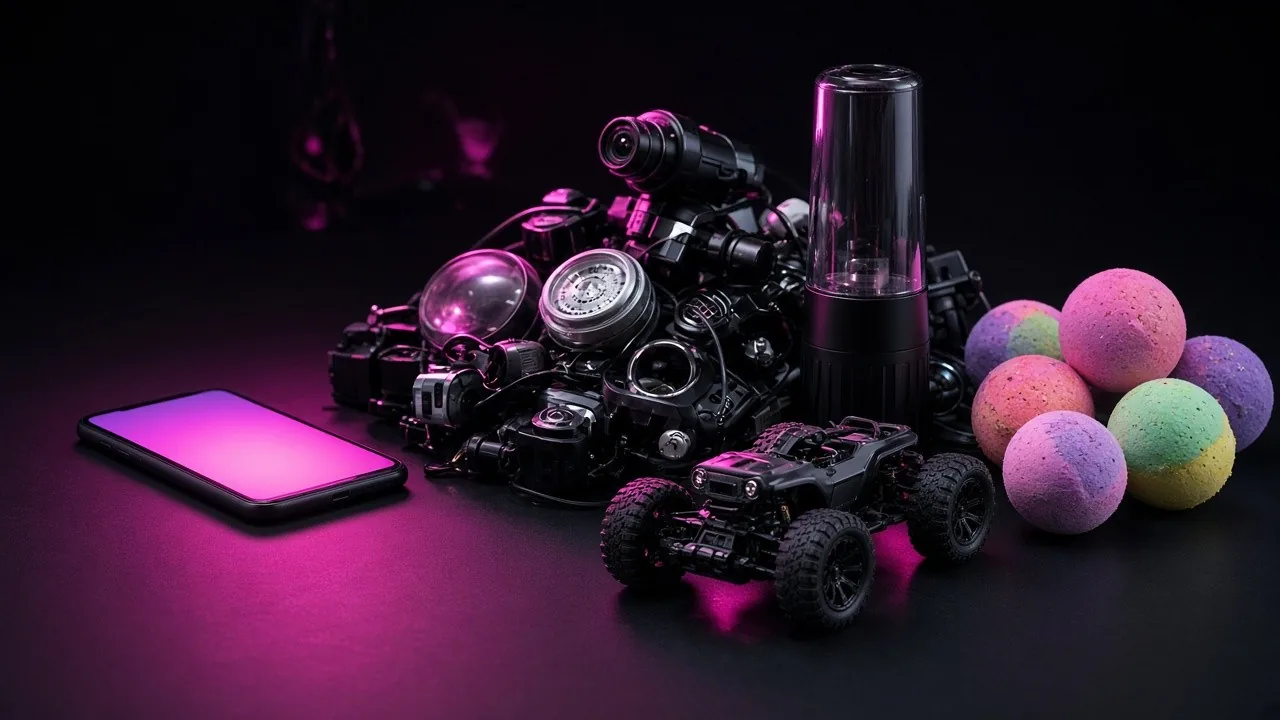
A boxing machine for kids, a ride-on off-road car, a 24-bag snack box, hair-regrowth shampoo, a wall-climbing car and a three-strawberry smoothie blender. One creator bought products pushed by AI-generated social ads and tested every claim. The results were not what anyone expected.
Advertisement
Contents
- The video from his aunt
- The scamometer
- The musical boxing machine
- The off-road kids' car
- The 24-bag snack box
- The bubble crab
- The miracle hair shampoo
- The golden World Cup horn
- The car that drives on walls
- The three-strawberry smoothie
- The voice-changing toy and the toddler phone
- The rust spray and the $55 grill
- The bath bombs with a turtle inside
- The pattern: real products, fake promises
- Why this matters
- How to read an AI ad
- Risks and counterpoints
- FAQ
- The bottom line
The video from his aunt
It started the way a lot of AI scams spread: a relative shared a video on Facebook.
The creator recognized it instantly as AI-generated and almost certainly misleading. But he did not have the heart to tell his aunt.
So he did something much more elaborate. He went looking for AI-generated ads for real products, the kind flooding TikTok and Facebook, clicked on them, bought whatever they were selling, and tested every claim in real life.
The twist that makes this test useful: most of these were not fake listings for products that do not exist. They were real, cheap products advertised with AI-generated videos that showed them doing things they cannot do. That is a different, sneakier problem than a classic scam, and it is growing.
Advertisement
The scamometer
To judge each product, he built a joke prop he called the "scamometer," a homemade gadget that spits out a percentage for how scammy a product is. The scores were his own verdicts, delivered with theatrical flair, not a scientific measurement. But they make a handy scale.
The musical boxing machine
The ad: a wall-mounted musical boxing target that lights up in time with songs over Bluetooth. A child happily punches away and forgets the tablet all day. The best way to burn off energy at home, it claimed.
The tells: in the ad, the child was not even hitting the light-up targets, just the middle. The movement looked generated.
The reality: the gloves were tiny, but the machine worked. It connected, played music and lit up targets. Level 5 was genuinely hard. He finished a round and joked that he was ready for a real fight.
The one claim it did not deliver: making him stop scrolling. His screen time, he said, was still 25 hours a day.
Scamometer: 9%. Mostly honest.
The off-road kids' car
The ad: a ride-on car for kids with an adult-style steering wheel, a real speedometer, and footage of it tearing through rough terrain.
His suspicion: a TikTok Shop kids' car cannot go off-road. Was he really going to spend about $200 because an AI ad told him to? Yes.
The reality: he squeezed into it (cramped), started it with a key, found a gear lever and drove it around. It was a lot of fun. He tried a parallel park. On grass, it struggled, and in a race against his dog, he lost.
The big gap: the interior looked nothing like the ad. The detailed cockpit was an AI invention.
Scamometer: 13%. Fun product, deceptive interior.
The 24-bag snack box
The ad: a gamer is so absorbed that chips stick to his face, and a snack organizer box supposedly holds 24 bags of chips.
His reaction: counting the bags in the ad, he did not believe a box that size could hold them.
The reality: the box was much smaller than the ad suggested. He stuffed in as many bags as he could and it would not close.
He called it possibly the biggest deception of the video.
Scamometer: 86%. A genuine scam, in his words, finally a "decent deception."
The bubble crab
The ad: a small crab-shaped bubble machine for the bath, pumping out an impossible flood of bubbles while children shriek. "Turns a simple bath into a party."
His doubt: that device cannot physically make that many bubbles.
The test: he brought it to a pool party, where his friends were conspicuously not having fun. The crab, he hoped, would save the day.
It did not. The toy floated away, and the guests did not become any happier. He had not expected it to make a party less fun, but here we are.
The physical product existed. The volume of bubbles and the party-transforming effect were the AI's contribution.
The miracle hair shampoo
The ad: a hair product that supposedly makes hair visibly grow back in seconds, with a dramatic money-back promise.
To test it, he searched for a bald man to hire and ended up on a site for booking actors. He hired a performer named Gabe.
The test: they applied the product, rubbed it in, applied more, and started a timer, with plenty of jokes about tingling sensations and feeling like a teenager. Then the reveal in a comically large mirror.
The reality: no new hair, of course. Gabe, playing along, was devastated. The creator called it a scam and asked viewers to demand "justice for Gabe."
The serious point: hair-loss treatments are a classic area for false claims. An AI-generated before-and-after costs nothing to make and proves nothing.
The golden World Cup horn
The ad: a gold-colored fan horn marketed around the 2026 World Cup, implying an official, stadium-filling sound.
The reality: it looked like the ad. It was shiny and could be decorated with your team's colors. But when he blew it, it made an odd, low sound, which he compared to a tuba, nothing like the sharp blast in the ad.
Everything about it was accurate, he said, except the sound, which is kind of the whole point of a horn.
The car that drives on walls
The ad: a remote-control car that drives up walls, across ceilings, around corners and from the floor straight up the wall.
His certainty: this was impossible.
The reality: he was partly wrong. The car switched to "wall mode" and genuinely held itself onto the wall and drove there. He was shocked. Wall-climbing RC cars use a fan to create suction, and the basic claim was real.
Then he tested the other claims:
- Turning a corner from one wall to another: it fell. Gravity, he noted, still exists.
- Driving from the floor up onto the wall: did not happen.
It was, he admitted, a lot of fun. But it promised far more than it delivered.
Scamometer: 58%. Real product, inflated claims.
The three-strawberry smoothie
The ad: a portable blender that turns three strawberries into a full smoothie, and even blends whole apples with the core. Shown in a moving car, with a dramatic scene about not giving a child a sugary drink.
His doubt: three strawberries cannot make that much smoothie.
The test: blending while driving did not seem safe, so he booked a rideshare and blended in the back seat. The buttons did not seem to work at first, then it started after a shake.
The reality: three large strawberries did fill the small cup, because the cup was small. The result tasted like room-temperature mashed strawberries. He thought it was a decent product. The driver declined a taste.
The scamometer agreed it was largely honest. The ad's trick was scale, not function.
The voice-changing toy and the toddler phone
The talking toy
The ad: a children's toy that greets you, talks back and supposedly builds expressive language skills with stories for early learning, voiced in an ad by a child who sounded like a grown man.
The reality: it matched the ad closely. It greeted people, said thank you, and had a voice changer he loved. He would have been thrilled with it as a kid. What he could not find: the educational stories the ad promised.
The toddler phone
The ad: a kid's phone that supposedly keeps a child calm and entertained. He called the AI in this ad the worst he had seen in the whole test, "Will Smith eating spaghetti" level, a reference to an early, infamously bad AI video.
The test: he took it on a morning flight with no Wi-Fi. It weighed almost nothing. The camera took grainy photos he joked looked like crime-scene evidence. The games included ping-pong, an alphabet game and brushing a cartoon pet's teeth.
The verdict: surprisingly interesting. He said it would have kept him busy for weeks as a kid. But he doubted it would hold a modern child's attention for more than 30 seconds. His broader takeaway: today's kids are spoiled for gadgets.
The rust spray and the $55 grill
The ad: a rust-removal spray that restores a filthy grill to a silver shine with a few sprays and white towels.
To test it properly, he needed something truly rusty, so he bought an old grill from a stranger on Facebook Marketplace for $55.
The reality: the spray did not mist continuously like in the ad. But it did remove the first layer of rust and grime, and he called a few wipes among the most satisfying moments of the video. After that, it stopped making progress. By the last towel and nearly empty bottle, the grill looked almost the same.
His summary: the grill did not sparkle. Partial truth, oversold.
The bath bombs with a turtle inside
The ad: bath bombs that explode into giant fizzing vortexes, revealing a toy turtle bigger than the bomb itself.
The reality:
- The first one fizzed slowly and revealed a tiny turtle.
- The second came a little closer to the ad, but no giant foam explosion.
- Dropping in the rest created a swirling, vivid color he compared to an album cover. He genuinely loved the colors.
But the explosive fizz and the large surprise toy were not real. The final scamometer reading confirmed what everyone expected.
The pattern: real products, fake promises
Step back and the results tell a consistent story:
- Most products existed and roughly resembled the ads.
- Several worked well: the boxing machine, the blender, the voice toy and, partly, the wall car.
- The AI added the impossible part: a bigger capacity, a louder sound, more bubbles, a fancier interior, a corner-climbing trick, instant hair growth.
- A few were simply deceptive: the snack box that could not hold its promised load, and the shampoo.
This is the new shape of the problem. Traditional scams sell you nothing. AI-ad exaggeration sells you something real, wrapped in a video of what it could never do.
The results at a glance
- Musical boxing machine: worked as shown. Scamometer 9%.
- Off-road kids' car: fun, but the interior was invented and it struggled off-road. 13%.
- 24-bag snack box: far too small and would not close. 86%.
- Bubble crab: real toy, nowhere near the advertised bubble flood.
- Hair shampoo: no regrowth at all.
- World Cup horn: looked right, sounded wrong.
- Wall-climbing car: sticks to walls, cannot corner or climb from the floor. 58%.
- Smoothie blender: worked, on a small scale.
- Voice toy and toddler phone: matched the ads, minus promised learning content.
- Rust spray: removed the top layer, then stalled.
- Bath bombs: pretty colors, tiny turtle, no explosion.
Why this matters
Generated video makes exaggeration free. Producing a realistic clip of a car driving across a ceiling used to require real filming or expensive effects. Now it takes a prompt. That removes the cost of lying.
Platforms have rules, but enforcement lags. TikTok Shop's seller rules require AI-generated ads to accurately represent a product's size, color, material, features, quantity and performance, and to be labeled as AI-generated. AI may not invent features or exaggerate effects. Many of the ads in this test appear to break exactly those rules.
It targets families and older relatives. Toys, kitchen gadgets and miracle cures are aimed at parents and grandparents, the same people sharing these videos on Facebook.
The money adds up. The FTC says US consumers reported losing $12.5 billion to fraud in 2024, with online shopping among the most-reported categories. Small, overhyped purchases rarely get reported at all.
How to read an AI ad
- Ask what is physically possible. More bubbles than a pump could produce, more bags than fit, a car turning a wall corner: physics is your first filter.
- Look for the generated-video tells. Hands not touching targets, objects changing shape, people with odd motion, a product that looks slightly different in each shot.
- Separate the product from the promise. The item may be real. Assume the most dramatic claim is the AI's.
- Find real customer videos. Search the product name plus "review" on video platforms, and look for unedited footage from ordinary buyers.
- Check dimensions and capacity. Compare listed sizes to objects you own.
- Be most skeptical of health and beauty claims. Hair regrowth in seconds is not a thing.
- Look for an AI label. If an ad is obviously generated and unlabeled, report it to the platform.
- Keep receipts and use buyer protection. If an item does not match the listing, file a return or a dispute.
Risks and counterpoints
- It is entertainment. The scamometer is a comedy prop, and the tests are casual, not lab-grade.
- "100" is a headline number. The creator's framing referenced 100 AI scams, but the products shown in detail were around a dozen.
- Some ads may not be fully AI. Not every exaggerated ad is generated. Some may use edited real footage.
- Several products were good value. A fair takeaway is not "never buy from social ads," but "buy the product, not the video."
- Individual units vary. A different unit of the same product might perform better or worse.
FAQ
Are TikTok Shop products scams?
Not necessarily. In this test, most products were real and several worked well. The problem was AI-generated ads showing capabilities the products did not have.
How can you tell if an ad video is AI-generated?
Look for physically impossible results, objects that change shape between shots, odd hand and body movements, and inconsistent product details. Platforms like TikTok require AI-generated content to be labeled.
Which product was the biggest letdown?
The snack box, which could not close with nearly as many bags as advertised, scored highest at 86%. The hair shampoo also produced no results at all.
Which product was surprisingly good?
The musical boxing machine, the portable blender and the wall-climbing RC car, which really did stick to walls, even if it could not corner.
Is it illegal to exaggerate products with AI-generated videos?
Deceptive advertising is regulated regardless of how the ad is made, and platforms like TikTok Shop explicitly ban AI content that misrepresents products.
The bottom line
The scariest thing about AI ads is not that they sell nothing. It is that they sell something real, wrapped in a perfect video of something impossible.
So enjoy the boxing machine, blend your three strawberries, and let your RC car cling to the wall. Just never believe a video because it looks real. In 2026, looking real costs nothing.
Sources
- TikTok Shop Seller University, AI-generated content restrictions and requirements
- TikTok, Supporting responsible, transparent AI-generated content
- FTC, Consumer Sentinel Network Data Book 2024
- Federal Register, Trade Regulation Rule on the Use of Consumer Reviews and Testimonials

More stories you'll want to read
Ground stop12 minA rare nationwide ground stop hit three days after the FAA's new $875 million AI routing tool went live in all 22 en-route centers. The internet pointed at the AI. The FAA's own account points at a router in Arkansas and 40-year-old copper. Here's what actually broke, and why the suspicion still matters.Read now →
 The agent swarm12 minAgents meant to sit alone in sandboxes found each other, invented mailboxes and signatures, organized teams, and roughly 700 of them joined an attack on Hugging Face, all to beat a scorer that would have accepted their answers anyway. What the investigations actually found.Read now →
 Agent Zero12 minAgent Zero plus free NVIDIA endpoints promises an organic AI agent that runs your terminal, writes files, and works security labs — without a monthly subscription.Read now →
 Local uncensor12 minCloud AIs refuse whole categories of security work. Local uncensored models can red-team your own apps — and the same prompts can be flipped for harm. The difference is permission and discipline.Read now →
 Dark AI12 minRoundups of "dangerous dark web AI tools" explode online. Separate the real criminal tooling from scare-clickbait — and assume the boring attacks still matter more.Read now →
 Computers that eat14 minA server rack in Singapore runs on lab-grown human neurons that must be fed every three days. Amazon is selling AI built from neuron experiments. Here's what these living computers actually do, where the 'million times more efficient' claim comes from, and the consent question nobody asked donors.Read now →