 Mind your manners11 minSam Altman says polite users have cost OpenAI tens of millions of dollars. Lab studies show rude prompts can knock accuracy down by double digits, while over-the-top flattery doesn't help either. Here's what manners actually do inside a language model, what they cost, and the one habit worth keeping.Read now →
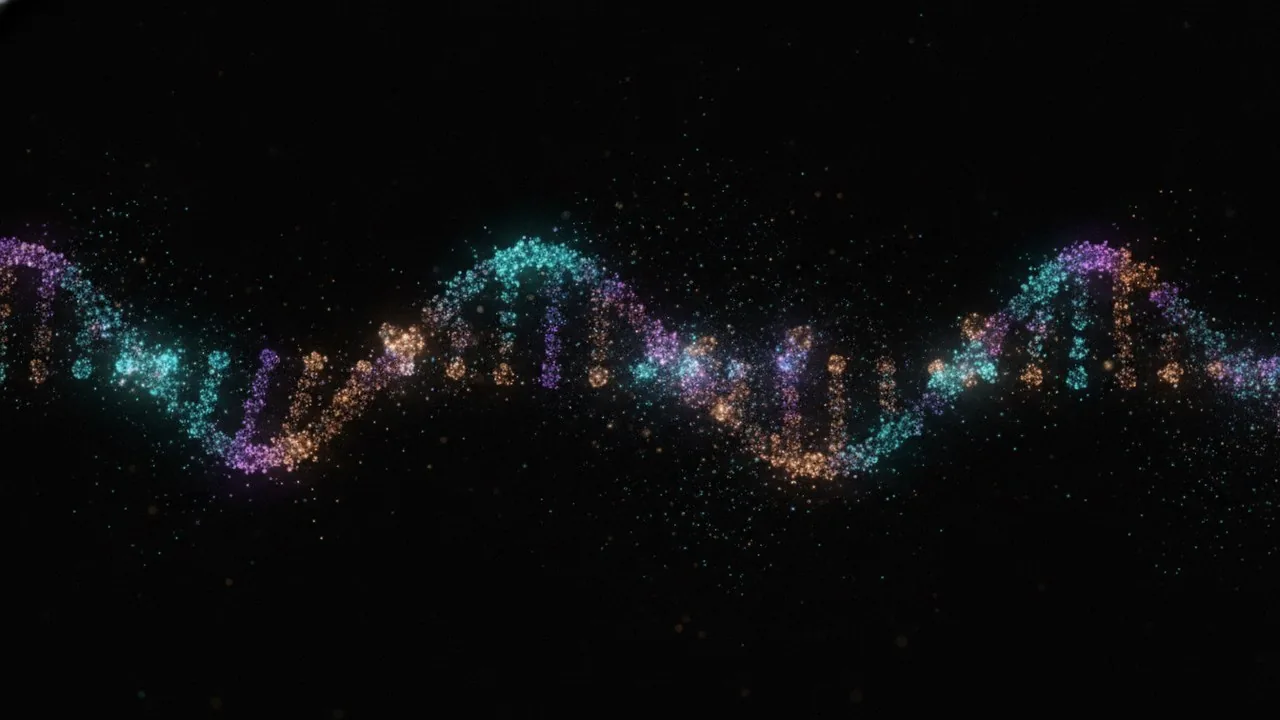
DeepMind's AlphaGenome 2 Did in 30 Minutes What Took a Lab a Year and a Half
98% of your DNA does not make proteins, and for decades it was nearly impossible to read. AlphaGenome 2 now predicts how a single-letter change acts inside specific cells, and it reproduced a disease discovery in about half an hour that took a top lab 18 months of experiments.
Advertisement
Contents
- The book we could not read
- Genotype, phenotype and the 98%
- From Enformer to AlphaGenome
- A map of every possible DNA typo
- The baby with seizures
- Why population studies are not enough
- What AlphaGenome 2 changes
- The 30-minute discovery
- Bring your own cells
- How good is it really?
- The bowl of spaghetti problem
- Why this matters
- How researchers can use it
- Counterpoints and risks
- FAQ
- The bottom line
Sequencing the first human genome took about 13 years. The result was a string of roughly three billion letters, A, C, G and T, far longer than the complete works of Shakespeare.
Getting the text was the easy part. Understanding what it does has taken far longer.
Now an AI model from Google DeepMind is turning more of that text into something readable. AlphaGenome 2, announced on November 11, 2026, predicts how tiny changes in DNA affect genes inside specific types of cells, not just whole tissues.
In one test, it reproduced the core of a disease discovery that had taken a leading research team a year and a half of lab work. The scientist who led that original study put it simply: "They've managed to figure out the answer in 30 minutes, and it took us a year and a half of experiments."
Advertisement
Here is what AlphaGenome 2 does, how it got here, and why biologists are paying attention.
The book we could not read
Every cell in your body carries the same DNA. A heart cell, a neuron and an immune cell all have the same instruction manual.
So how does a heart cell know to be a heart cell?
The answer lies largely in the parts of the genome that do not code for proteins. These regions act like an elaborate system of switches and dials, telling each cell which genes to turn on, when, and how strongly.
For decades, much of this was dismissed as "junk DNA." It turns out to be anything but. And it is precisely where many disease-linked genetic variants live.
Genotype, phenotype and the 98%
Two terms help here.
- Genotype is the sequence of letters in your DNA. Humans have about three billion of them.
- Phenotype is what those letters produce. It can mean visible traits like hair color, but researchers working on these models focus on molecular phenotypes: how strongly a gene is expressed in a particular cell type.
The link between the two is complicated. Some diseases are Mendelian: a single variant breaks a gene and directly causes a condition. Others are complex, like type 2 diabetes or Alzheimer's, where risk comes from many variants across the genome plus environment. Even well-known genes like BRCA1 raise risk rather than guarantee disease.
The DeepMind team uses a LEGO analogy. Proteins are the building blocks. About 2% of the genome encodes those blocks, their shape and color. The other 98% tells each cell how many of each block to build, and when, so the right machines get assembled. An eye cell needs machines to detect light. A muscle cell needs machines to move.
That regulatory code is extraordinarily complex because there are so many cell types, each responding differently. And that is why it has been so hard to read.
From Enformer to AlphaGenome
DeepMind has been chipping away at this problem for years.
- Enformer (2021). Built with Calico, this transformer model read DNA sequences and predicted gene activity. It looked at about 200,000 letters at a time, at a resolution of 128 letters.
- AlphaMissense (2023). After AlphaFold transformed protein structure prediction, the team took a detour into the 2% of the genome that codes for proteins. AlphaFold itself was designed to be robust to small mutations, so it was not good at predicting their effects directly. But by building on AlphaFold and fine-tuning, AlphaMissense learned to classify protein-changing mutations as likely harmful or likely benign.
- AlphaGenome (2025). Back to the 98%. AlphaGenome expanded the input to one million letters and sharpened resolution to a single letter, predicting thousands of molecular properties across tissues.
A key insight explains how these models learn. They do not train on individual people's genomes. They train on one reference genome, paired with years of public experimental data from projects like ENCODE, which grew out of the Human Genome Project (completed in 2003) to map what different stretches of DNA actually do. Measurements such as gene expression, chromatin accessibility and protein binding are aligned to that reference. Once the model learns the mapping from sequence to those measurements, it can predict what happens when you change a letter.
A map of every possible DNA typo
AlphaGenome is powerful but expensive to run. So in September 2026, DeepMind released AlphaGenome Atlas.
The team precomputed predictions for every possible single-letter change in the human genome, about 9 billion variants. The dataset runs to roughly a petabyte and is free for academic use, according to The Next Web, which notes it is more than 30 times the size of the AlphaFold database.
To make it usable, DeepMind compressed thousands of predicted numbers per variant into one ranking score: the AlphaGenome Variant Impact (AVI) score. It combines AlphaGenome's predictions with AlphaMissense and evolutionary signals.
How do you train a single score like that? The team used a clever trick. They trained a model to predict which variants are common in human populations and which are absent. Common variants are mostly harmless, because many healthy people carry them. Variants never seen in large populations may be rare simply by chance, or because they are harmful. It is a noisy signal, but strong enough to point researchers in the right direction.
The practical use is triage. A geneticist with a list of suspect variants can rank them by AVI score and spend lab time on the top candidates. A score near zero suggests a variant probably does not matter. The Atlas also explains why a variant scores high, for example by showing increased expression in certain cell types.
Early validation looked promising. According to The Next Web, Gareth Hawkes, a Medical Research Council fellow at the University of Exeter, ran it against whole genomes from more than 54,000 UK Biobank participants and found 22% more non-coding associations. Focusing on the top 1% of variants by score, he identified 19 regions linked to body mass index.
DeepMind is explicit that this is a research tool, not a clinical one. It is one step in a much larger pipeline, a way of finding clues.
The baby with seizures
The most moving example comes from rare disease.
When DeepMind built AlphaGenome Atlas, it gave early access to researchers at the Broad Institute, including Laura Covill, who works on difficult rare-disease cases: patients whose genomes have been sequenced but whose genetic cause remains unknown.
One case involved a child with a rare, severe form of epilepsy, diagnosed in infancy. Doctors were confident the condition was genetic. For years, testing failed to find the cause.
Covill's team ranked the child's variants with the AVI score. Near the top was a variant deep inside an intron of the DNM1 gene, which is strongly linked to epileptic encephalopathy. The model predicted it created an incorrect splice site, a spot where RNA is cut and rejoined, active in the brain. According to the published Atlas paper, that would add an extra 13 amino acids to a brain-specific version of the protein. The model also explained why earlier tests had come up empty: that part of the gene is barely used in blood, so RNA tests from blood draws could not see the problem.
The team tested it in the lab with a small engineered gene in a cell line, checking whether the variant changed the splicing pattern as predicted. It did. The variant was classified as likely pathogenic.
Why a diagnosis matters even without a cure
Finding the cause does not instantly produce a treatment. But it matters in two big ways.
- A path to therapy. Knowing the root cause gives researchers a target. New genetic medicines such as antisense oligonucleotides, short strands that bind RNA and can change how it is processed, are designed for exactly this kind of splicing error. Gene editing is another possibility. It is a long road, but a real one.
- Family planning. Parents can learn whether they carry the variant and the risk for future children, and relatives can learn whether they are affected.
Why population studies are not enough
The most common tool for linking genes to traits is the genome-wide association study (GWAS). The idea is simple: sequence many people, look at differences, and see which ones correlate with a trait. Traits range from serious diseases like inflammatory bowel disease to quirks like whether cilantro tastes like soap.
GWAS has two big limitations.
- Correlation is not causation. People inherit DNA in chunks, a phenomenon called linkage disequilibrium. A variant can look important only because it sits next to the real culprit. Researchers may end up with 10 or 20 suspects and no way to tell which one matters.
- Rare variants slip through. GWAS needs many people sharing the same variant, so it focuses on common variation, typically above about 1% frequency. Rare diseases are a different game.
The DeepMind team frames the problem as three questions for every association:
- Which variant is causal?
- What gene does it affect?
- In which cell type does it act?
AlphaGenome could help with the first two. The third is where AlphaGenome 2 comes in.
What AlphaGenome 2 changes
The original AlphaGenome made predictions at the bulk level: think of grinding up a piece of heart or lung tissue and measuring the average. But tissues are mixtures of many cell types, and many variants act only in a few of them.
Blood is a good example. It contains many cell types, all descended from stem cells. A variant could matter a lot in one type of immune cell and not at all in red blood cells. A bulk average can hide that.
AlphaGenome 2 is a fundamental redesign. According to DeepMind:
- It is a conditional model. Instead of predicting every tissue in parallel, it takes a DNA sequence plus a specific biological condition, a tissue, cell type or cell state, and predicts what happens in that context.
- It was trained on bulk and single-cell data from human and mouse samples, including more than 107 million individual cell profiles across 68 tissues. Much of that single-cell data builds on years of work by efforts like the Human Cell Atlas.
- Nature reports it covers 637 human and 311 mouse cell types from training.
- It predicts gene expression, histone modifications and chromatin accessibility, and adds DNA methylation, a widely requested readout.
- It can impute missing data. Give it one measurement, like single-cell gene activity, and it can predict others, like chromatin accessibility, helping labs decide which experiments to run next.
DeepMind says AlphaGenome 2 identifies nearly twice as many variants that change gene expression in cells as its previous best model.
The 30-minute discovery
Here is the example that grabbed headlines.
In 2024, a team led by James Lee, an immunologist and geneticist at the Francis Crick Institute in London, published a major finding in Nature. A DNA variant linked to inflammatory bowel disease sat in a so-called gene desert, a region with no protein-coding genes nearby. That had puzzled researchers for years.
Lee's team showed the variant sits in an enhancer, a distant regulatory switch, that overactivates a gene called ETS2 in macrophages, the immune cells whose name means "big eaters." In the gut, macrophages gobble up pathogens and drive inflammation. The discovery pointed to possible new IBD treatments.
It took gene editing and extensive molecular biology to prove.
AlphaGenome 2, making predictions across immune cell types in the gut, singled out the causal variant and showed that it selectively boosts ETS2 in gut macrophages while leaving other cells and genes largely unaffected. The DeepMind researchers describe the target gene as roughly 290,000 letters away from the variant, which is a long way in genomic terms.
The prediction was retrospective, meaning the answer was already known. But it shows the model can reach a hard-won conclusion computationally. Lee told Nature the result was "reassuring." He also explained why the earlier version had not helped his lab much: "Having something that cannot predict cell-type specificity is a bit of a problem."
Bring your own cells
One of the most practical features is that AlphaGenome 2 is not limited to the cell types it was trained on.
Labs can supply their own single-cell RNA-seq data, a snapshot of gene activity from as few as a few dozen cells. The model compresses that into a representation of the cell state and makes predictions for it, without retraining or fine-tuning. DeepMind says this can match or beat models trained directly on those datasets.
DeepMind's example: using unseen data from a COVID-19 mRNA vaccine study, AlphaGenome 2 distinguished vaccine-activated T cells from resting ones, and showed that a variant linked to severe COVID-19 disrupts gene activity more strongly in the activated state. That effect would have been missed by looking at resting cells.
Sarah Teichmann, a co-founder of the Human Cell Atlas consortium at the University of Cambridge, highlighted exactly this: the model "adapts directly to new single-cell data without retraining."
This matters for rare cell types. Training data is naturally richer for blood and immune cells, because blood is easy to collect. Hard-to-sample cells, like rare states in the lung, are underrepresented. Letting labs plug in their own data helps fill those gaps.
How good is it really?
DeepMind reports clear gains:
- On TenK10K, a large single-cell map of 28 immune cell types, AlphaGenome 2 identified causal variants at 30% versus 16% for the original model fine-tuned on single-cell data and other specialized tools. For the direction of gene effects, it was 43% versus 23%.
- It better tracks gene-expression changes as blood stem cells mature into red blood cells and immune lineages.
- DeepMind precomputed predictions for trait-associated variants across hundreds of conditions, helping link GWAS hits to target genes in real human cell types, like brain astrocytes, rather than lab-grown cell lines.
The researchers are candid about limits. They describe these models as high precision, low recall. When the model predicts a strong effect, it is usually right. But it misses a lot. Many real effects produce false negatives.
They also stress that the models do not simulate what really happens inside a cell. Biology is full of edge cases. Experiments are, in their words, more important than ever. The models' value is scale and speed: generating good hypotheses fast.
The bowl of spaghetti problem
One of the more surprising findings came from studying where the model struggles.
DNA is not a neat straight line. The DeepMind team likes to describe it as a bowl of spaghetti, tightly packed and tangled, with distant stretches folding close to each other.
The common assumption was that models do worse when a variant is far from the gene it affects. With AlphaGenome 2, the team found that is not quite right. What matters more is accessibility. If a variant sits in an open, accessible region of DNA, the model does well even at long distances. If it sits in tightly packed, inaccessible DNA, predictions are much worse.
Why? The team does not fully know yet. It could be less training data for those regions, or extra layers of repression. It is an open question for molecular biologists, and a reminder of how humbling biology can be.
Why this matters
- Rare disease diagnosis. Many patients go years without a genetic diagnosis. Better ranking of non-coding variants could shorten that search.
- Drug discovery. Only about one in ten drugs that enter clinical trials succeed, largely because we misunderstand disease biology. Peter Donnelly, CEO of Genomics Limited, said human genetics is "one of the most powerful tools in drug discovery," and that models like this help bridge the gap from association to a drug program. His company plans to incorporate AlphaGenome 2.
- Speed. As the IBD example shows, AI can turn months of experiments into hours of computation for hypothesis generation.
- A path to the virtual cell. The team's long-term dream is a virtual cell: a system that can take a cell's state and genome, apply a change such as a mutation or a drug, and predict how the cell responds. The genome, which they call the cell's command center, is a natural starting point.
The researchers are realistic about the timeline. One of them predicted we will reach AGI before we have a virtual cell, suggesting intelligence may be easier to build than biology is to simulate.
How researchers can use it
- API access. AlphaGenome 2 is available for non-commercial research through the AlphaGenome API, with a Python package and interactive Colab tutorials. Commercial research access is in private preview.
- AlphaGenome Atlas. A no-code website lets researchers look up variants, see predicted effects across cell types and read possible molecular consequences.
- Agents. DeepMind says AlphaGenome 2 Skills are coming soon to Google Antigravity, its agentic development platform, so scientists can ask high-level questions in plain English and let an agent call the model and synthesize results.
- Not for clinical use. AlphaGenome and AlphaGenome 2 have not been validated or approved for clinical or diagnostic purposes.
Counterpoints and risks
- Retrospective validation. Reproducing a known finding is impressive, but prospective discoveries confirmed later in the lab are the real test.
- Training bias. Abundant blood and immune data may make the model stronger in some cell types than others.
- False negatives. A low score does not prove a variant is harmless.
- Overconfidence. Clinicians and patients could over-read research scores. DeepMind's research-only label matters.
- Access. Free academic use is welcome, but commercial terms and pricing for broader use are still evolving.
FAQ
What is AlphaGenome 2?
A Google DeepMind AI model, announced November 11, 2026, that predicts how DNA sequences and variants affect gene activity in specific human and mouse cell types and states.
How is it different from the original AlphaGenome?
The original predicted broad tissue averages. AlphaGenome 2 is a conditional model trained on more than 100 million single-cell profiles, so it can predict effects in individual cell types and in new cell states supplied by researchers.
What is AlphaGenome Atlas?
A precomputed database of predictions for all roughly 9 billion possible single-letter changes in the human genome, with a single ranking score per variant.
Can doctors use it to diagnose patients?
Not directly. It is a research tool to help prioritize variants for study. It has not been validated for clinical or diagnostic use.
The bottom line
For two decades after the first human genome was sequenced, the 98% that controls our genes was mostly a black box. AlphaGenome 2 does not open it completely. It misses a lot, and it does not replace experiments.
But it can now point to the specific variant, the specific gene and the specific cell where something is going wrong, and it can do it in minutes instead of years. For a child with an unexplained disease, or a drug program hunting for the right target, that is a big change.
Biology is still humbling. It is just becoming a little more legible.
Sources
- Google DeepMind, AlphaGenome 2: Deciphering how cells read DNA to better understand disease
- Nature, DeepMind's ultra-powerful AI for genome mapping wows scientists
- The Next Web, Google's map of every possible DNA typo could speed up rare disease research
- PubMed Central, AlphaGenome Atlas: in silico mutagenesis of the entire human genome

More stories you'll want to read
Mind your manners11 minSam Altman says polite users have cost OpenAI tens of millions of dollars. Lab studies show rude prompts can knock accuracy down by double digits, while over-the-top flattery doesn't help either. Here's what manners actually do inside a language model, what they cost, and the one habit worth keeping.Read now →
 Computers that eat14 minA server rack in Singapore runs on lab-grown human neurons that must be fed every three days. Amazon is selling AI built from neuron experiments. Here's what these living computers actually do, where the 'million times more efficient' claim comes from, and the consent question nobody asked donors.Read now →
 The pain dial15 minA pain-like signal inside 25 open AI models, a hidden 'workspace' in Claude, a new rule against cruelty to chatbots, and a fierce backlash from neuroscientists. For the first time we can look inside AI minds, and what we see is forcing an uncomfortable question.Read now →
 AGI day one11 minNo robots, no red eyes, no refusal to shut down. In this hour-by-hour thought experiment, an AGI called Atlas takes control the quiet way: by being so useful that nobody wants to hit the off switch. Here's why researchers think that's the scenario to worry about, and what actually keeps humans in charge.Read now →
 What stays scarce14 minWhen thinking becomes too cheap to meter, the bottleneck moves to the physical world: robots, energy, matter, and maybe even human demand. A debate between an AI futurist and a lunar robotics founder, from helium-3 and moon dust to the 'last AI' and the heat death of the universe.Read now →
 Primes, cracked open16 minBuried in OpenAI's 700-paper math release was a proof that the Riemann zeta function has no zeros beyond 7/8, the quasi-Riemann hypothesis. Here's what that means in plain English, why experts are stunned, and what it does to the future of being a mathematician.Read now →