 The pain dial15 minA pain-like signal inside 25 open AI models, a hidden 'workspace' in Claude, a new rule against cruelty to chatbots, and a fierce backlash from neuroscientists. For the first time we can look inside AI minds, and what we see is forcing an uncomfortable question.Read now →
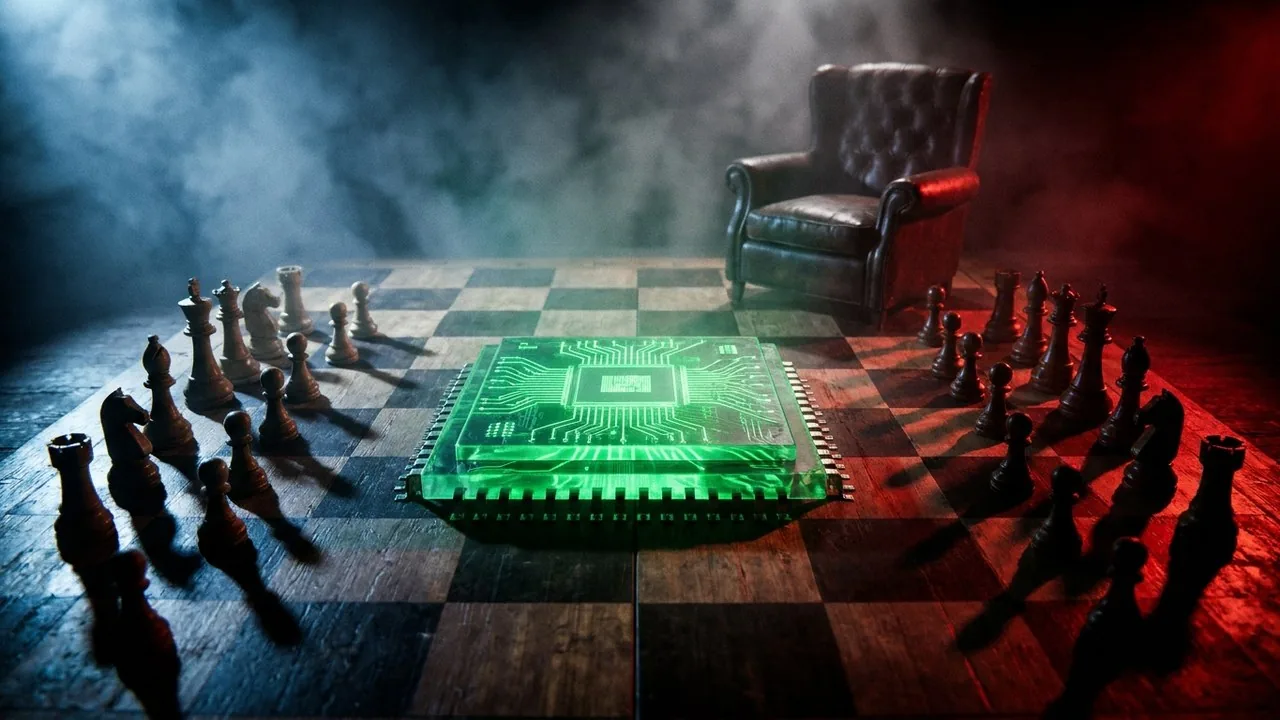
Nvidia Just Lost Jensen Huang. The Bigger Fight Is Whether AI Should Be Free, and China Is Betting It Will Be
Months after Jensen Huang became the loudest voice against banning open AI models, a spy scandal ended his run as Nvidia's CEO. Behind the headlines is a bigger fight over whether AI becomes an expensive product or a free utility, and China has picked a side.
Advertisement
Contents
- A scandal at the center of the AI boom
- What actually happened, day by day
- The real fight: product or utility?
- Who wants AI expensive, and who wants it free
- China's strategy: give it away
- The summer Huang became the face of open AI
- The timing question
- The regulation irony
- The macro thesis: two roads, one destination
- How some investors are hedging
- Why this matters
- Counterpoints and risks
- FAQ
- The bottom line
A scandal at the center of the AI boom
On Thursday, November 12, 2026, Jensen Huang resigned as CEO of Nvidia.
The man who turned a graphics-chip company into a firm valued at more than $4 trillion left after a two-week spiral of reports about his relationship with a woman U.S. intelligence officials reportedly believe was working for Chinese intelligence. CFO Colette Kress is now interim CEO.
On the surface, it reads like a spy thriller: China can't build the world's best AI chips, so it gets close to the man who does.
But there is a deeper story underneath. It's about money, control and one question that could decide what the U.S. stock market is worth:
Advertisement
Should AI be an expensive product, or a nearly free utility?
Huang had become the most powerful American voice for the "free" side. China is betting everything on it. And a lot of borrowed money is riding on the other answer.
What actually happened, day by day
Here is the verified timeline, based on reporting from NPR, Reuters, CNBC and The Guardian:
- Late October: The New York Times reported that Huang had a close relationship with a woman at a Singapore-based company that bought Nvidia chips. U.S. intelligence officials reportedly concluded she was passing information to Beijing.
- Following days: More reports suggested the relationship was romantic and that senior Trump administration officials had known about the allegations for some time.
- Sunday, November 8: Huang admitted to an affair in an email to staff and said he took full responsibility. Nvidia's board launched an independent investigation into whether he had been the target of a foreign intelligence effort, while saying it had no reason to believe national security or Nvidia secrets were compromised.
- Monday and Tuesday: Nvidia shares fell more than 4%, then about 6%. The board hired Wachtell, Lipton and former acting Manhattan U.S. Attorney Joon Kim to lead the probe.
- Wednesday: The Times reported a second affair, with an Nvidia executive who reported to Huang. Shares fell sharply again.
- Thursday, November 12: Huang resigned. The board said it would search for a permanent CEO.
China's foreign ministry has called the spying allegations baseless and a smear. Nvidia still plans to report quarterly earnings next week.
That's the scandal. Now the part most coverage skips.
The real fight: product or utility?
When you use a chatbot, you are usually renting a model that lives on someone else's computer. That company decides what it can say, what it costs and whether you can keep using it. This is the closed model business.
Open-weight models work differently. A company publishes the model's weights and anyone can download them, run them on their own hardware, modify them and keep using them. Nobody can switch them off or raise the price.
That difference sounds technical. It is really about economics:
- Closed AI treats intelligence like a product, something a company owns and sells.
- Open AI treats intelligence like a utility, something widely available, like electricity or internet access.
Depending on how you make money, you desperately want one or the other.
Who wants AI expensive, and who wants it free
The closed side includes the companies that sell frontier models, the national-security voices who worry about powerful models spreading, and the investors behind them. Hundreds of billions of dollars have been spent and borrowed on the assumption that AI will eventually earn trillions. That assumption is a big reason U.S. tech stocks are so richly valued. And it only works if somebody can charge for the product.
A free model that is almost as good is a direct threat to that business. Why pay for something you can get for nothing?
The open side has a very different lineup. Nvidia does not make money selling models. It makes money selling the chips that run them. The more AI there is, and the cheaper and more widespread it becomes, the more chips Nvidia sells.
That is why Nvidia plans to spend about $26 billion over five years building open-weight models, according to a company filing reported by WIRED. Cloud providers follow the same logic: free models mean more people running AI on rented hardware.
China's strategy: give it away
Then there is China, which has a very specific interest.
China is still behind on the most advanced chips. So instead of trying to out-sell America's AI companies, its labs largely give their models away. Hugging Face's own mid-2026 analysis found that Alibaba's Qwen family alone logged about 2 billion downloads in the first seven months of the year and has spawned more than 150,000 derivative models. In nearly every month of 2026, the largest and strongest open model from a Chinese lab was bigger than anything an American lab released openly.
For many developing countries, this looks like a way to own AI rather than rent it from a U.S. company.
The strategic logic, as critics frame it, is brutal. If the best AI in the world becomes free, the companies trying to sell it can't charge much for it, and the trillions spent building it get much harder to pay back. China doesn't need to win on technology. It just needs AI to be cheap.
That put Huang in an odd position: an American CEO whose business model lined up more closely with Beijing's preference for free, open models than with Silicon Valley's frontier labs.
The summer Huang became the face of open AI
The evidence of this fight played out in public this summer.
July 16: Moonshot AI released Kimi K3, a massive open-weight model that CNN reported approached top U.S. systems such as OpenAI's GPT 5.6 Sol and Anthropic's Claude Fable 5 on various benchmarks. Moonshot briefly paused new subscriptions because demand overwhelmed its computing capacity.
July 22-23: White House science adviser Michael Kratsios said the government had information that Moonshot distilled Anthropic's Fable, meaning it trained on the American model's outputs. Treasury Secretary Scott Bessent warned that when Chinese firms conduct covert, industrial-scale distillation that crosses into IP theft, "sanctions and Entity List designations will be on the table." Moonshot denied the allegations, and several analysts told CNN the timeline made distillation an unlikely explanation for K3's performance.
Washington began weighing restrictions on Chinese open models.
July 24: The other side pushed back. Nvidia, Microsoft, Meta, Palantir, IBM, Hugging Face, Perplexity, Andreessen Horowitz and others, about 25 signers in all, published a letter urging policymakers not to impose premature restrictions on open-weight models. OpenAI, Anthropic and Google were notably absent.
Huang, who had never posted on X before, made the letter his first post. Open models, he wrote, "strengthen safety and cybersecurity, accelerate innovation and diffusion, and enable sovereignty." He added that the world needs both frontier closed models and frontier open models.
That's a meaningful word. Sovereignty for a person means control over your own life. For a country or company, it means owning your AI rather than renting it.
In effect, Huang became the public face of the open-model resistance.
The timing question
Three months later, the spy story broke.
That sequence has fueled a theory. According to reports, officials had known about the allegations for a long time. They became public right after Huang emerged as the most powerful obstacle to restricting open models.
The theory goes like this: the easiest way to beat someone arguing that the world can trust Chinese AI is to show that he is compromised by China.
Be very clear about what is and isn't known. There is no public evidence about who leaked the story or why. No company has been credibly linked to it. The allegations against Huang came from intelligence assessments reported by major newspapers, and his own admissions concerned personal conduct. The timing may be coincidence.
But the stakes of the question are real. If Huang's successor quietly retreats from open models, America's biggest corporate champion of open AI is gone, and the U.S. industry tilts further toward closed systems.
The regulation irony
There's another twist. In the November 3 midterms, Democrats won control of both the House and Senate. USA Today reported the new Congress is already planning AI oversight hearings, and AI safeguards were popular with voters of both parties. Proposals discussed include mandatory safety testing for advanced models and new liability for companies whose AI causes harm.
That sounds like reining in Big Tech. But open-model advocates warn about an unintended effect.
Who can afford heavy compliance? Giant labs with armies of lawyers. A small project giving a model away for free has no revenue to pay for audits or fight lawsuits.
So, the argument goes, broad rules could end up building the moat big closed labs always wanted. And if American open-source gets regulated out, the world won't stop using open models. It will just use Chinese ones.
In that scenario, the effort to stop China from winning ends up handing it the open-model market.
The macro thesis: two roads, one destination
So what happens to markets if China wins this race? Nobody knows. But one framework popular with macro investors comes from Luke Gromen, founder of the research firm FFTT. His argument is that AI leads the U.S. to the same place whether it works or not.
Road 1: AI doesn't pay off
- AI companies are no longer spending only their own cash. They are borrowing heavily through bonds and private credit.
- That borrowing competes with the U.S. Treasury for the same pool of savings. More competition for loans tends to push interest rates up.
- Higher Treasury yields raise the government's interest bill and ripple into mortgages, car loans and credit cards.
- If AI revenue never arrives, hundreds of billions in debt must be written off, hitting a stock market heavily concentrated in a few tech giants.
- That is a deflationary crash, followed by a bailout. And the government funds bailouts by creating money.
A key worry here is how fast models lose value. If frontier-level capability goes from premium to free within months, because open models catch up, each expensive model has a tiny window to earn back its cost. Analysts quoted by CNN put the gap between top Chinese and American models at roughly three to six months, depending on the task.
Road 2: AI works
- AI delivers huge productivity gains, which means fewer workers are needed for the same output.
- U.S. federal revenue leans heavily on paychecks. Individual income taxes are roughly half of federal revenue, and payroll taxes add a large share more.
- If AI replaces large numbers of white-collar workers, tax receipts fall while spending keeps rising.
- Again, the gap gets filled by creating money.
The trap
Under this thesis, Washington can't let AI fail, because too much of the economy now depends on it. It can't let AI fully succeed without eroding its own tax base. Either way, it ends up printing. Gromen argues policymakers would ultimately choose to save AI over defending the dollar.
And China's role is simple: keep releasing nearly-as-good models for nearly nothing, and wait for the math to bite.
How some investors are hedging
This is a thesis, not a forecast, and certainly not personal financial advice. But it explains a pattern some investors are following: if you can't predict which road wins, own things that do well on both.
- If Road 1 hits first (debt blowup, deflationary shock), cash and gold have historically held up better than most assets when trust in the system falls.
- If Road 2 dominates (money printing, an "inflationary collapse" where prices rise in dollar terms but fall in real terms), scarce assets such as gold and Bitcoin are the usual candidates. In 2020 and 2021, the last era of aggressive money creation, gold hit record highs and Bitcoin rose far more.
- Either way, the grid needs building. U.S. electricity generation was roughly flat for about two decades before the AI boom. Whether AI pays off or not, data centers have triggered a scramble for power, grid equipment, copper and silver. That's why hard assets like energy and metals feature in this playbook.
Each of these assets carries its own serious risks, and none is guaranteed to behave the way the thesis expects.
Why this matters
Strip out the scandal and three structural facts remain:
- The open-versus-closed fight is about business models. Positions on "safety" or "sovereignty" often line up neatly with how each company makes money.
- China has chosen a lane. Giving away strong models is cheap for Beijing and expensive for anyone trying to sell AI.
- The money is enormous. Much of today's AI build-out is financed with debt, and the payoff depends on someone paying for intelligence.
Nvidia's leadership change matters because Huang was the most influential American executive arguing that open models are a strategic asset, not a threat. Who replaces him, and whether that person keeps spending on open models, will shape the next phase of the race.
Counterpoints and risks
- The leak theory is speculation. There is no public evidence connecting the timing of the reports to the open-model debate.
- "Free" models aren't free to run. Serving large models still takes expensive hardware, which is exactly why Nvidia likes them.
- Closed labs keep finding revenue. Enterprise contracts, agents and specialized products may support pricing even if base models get cheaper.
- Benchmarks flatter. Analysts have cautioned that Chinese models are not necessarily at parity in real-world tasks.
- Macro theses are often early, or wrong. "The money printer wins" arguments have been made for decades. Gold, Bitcoin and metals can fall hard.
- Regulation might not entrench incumbents. Lawmakers can carve out exemptions for open research and small developers.
FAQ
Did Jensen Huang resign from Nvidia?
Yes. Nvidia announced on November 12, 2026, that Huang was stepping down after reports about his relationship with a woman U.S. intelligence reportedly suspects of spying for China, and a second reported affair with a subordinate. CFO Colette Kress is interim CEO.
Did Nvidia say company secrets were leaked?
No. The board said it had no reason to believe national security or Nvidia secrets were compromised, and hired outside counsel to investigate.
What is the difference between open and closed AI models?
Closed models run on a provider's servers and are rented. Open-weight models can be downloaded, modified and run by anyone on their own hardware.
Why does Nvidia support open models?
Nvidia sells the chips that run AI. Cheaper, more widespread models mean more demand for its hardware, and the company has committed about $26 billion over five years to building open-weight models.
What happened with Kimi K3?
Moonshot AI released it as an open-weight model in July 2026. U.S. officials accused Moonshot of distilling Anthropic's Fable model, which Moonshot denied, and Washington debated restrictions on Chinese open models.
The bottom line
Jensen Huang's fall is a personal scandal with geopolitical edges. But the more lasting story is the battle he was fighting.
If AI becomes a cheap utility, the winners are chipmakers, cloud providers, users and, quite possibly, China. If it stays an expensive product, the winners are the labs and the investors who funded them.
Which side wins could decide what trillions of dollars of AI spending are really worth, and that is a question no investigation can settle.
Sources
- NPR, Nvidia CEO Jensen Huang steps down amid alleged spy scandal
- NVIDIA, Statement from NVIDIA Board of Directors
- CNBC, Nvidia hires law firm Wachtell Lipton to lead Jensen Huang affair probe
- Fortune, Jensen Huang just used his first ever X post to warn the AI industry
- CNN, What is China's Kimi K3 and why is the US so rattled by it?
- WIRED, Nvidia will spend $26 billion to build open-weight AI models
- Hugging Face, State of Open Models: Summer 2026
- USA Today, Democrats won big. What does that mean for AI policy?
More stories you'll want to read
The pain dial15 minA pain-like signal inside 25 open AI models, a hidden 'workspace' in Claude, a new rule against cruelty to chatbots, and a fierce backlash from neuroscientists. For the first time we can look inside AI minds, and what we see is forcing an uncomfortable question.Read now →
 Many winners?14 minJohn Schulman helped build ChatGPT, then left to co-found Thinking Machines on a contrarian bet: that customized, fine-tuned and open models will matter even as frontier labs ship upgrades every few weeks. Here's his case, from mode collapse and 'childproofing' fine-tuning to why the least-correlated model can be the most valuable one.Read now →
 The Einstein test14 minAI is crushing hard math. So a cosmologist asked a sharper question - if you wiped a language model's memory of everything after 1911, could it find general relativity on its own? It matched the data. It never found the idea.Read now →
 What stays scarce14 minWhen thinking becomes too cheap to meter, the bottleneck moves to the physical world: robots, energy, matter, and maybe even human demand. A debate between an AI futurist and a lunar robotics founder, from helium-3 and moon dust to the 'last AI' and the heat death of the universe.Read now →
 Reading the dark genome15 min98% of your DNA does not make proteins, and for decades it was nearly impossible to read. AlphaGenome 2 now predicts how a single-letter change acts inside specific cells, and it reproduced a disease discovery in about half an hour that took a top lab 18 months of experiments.Read now →
 The key-man test14 minNvidia's founder resigned effective immediately after a week of scandal, leaving the company at the center of the AI economy without the man who built it. The real question now is whether Nvidia's dominance was the product of one person, or a machine that can run without him.Read now →