 Computers that eat14 minA server rack in Singapore runs on lab-grown human neurons that must be fed every three days. Amazon is selling AI built from neuron experiments. Here's what these living computers actually do, where the 'million times more efficient' claim comes from, and the consent question nobody asked donors.Read now →
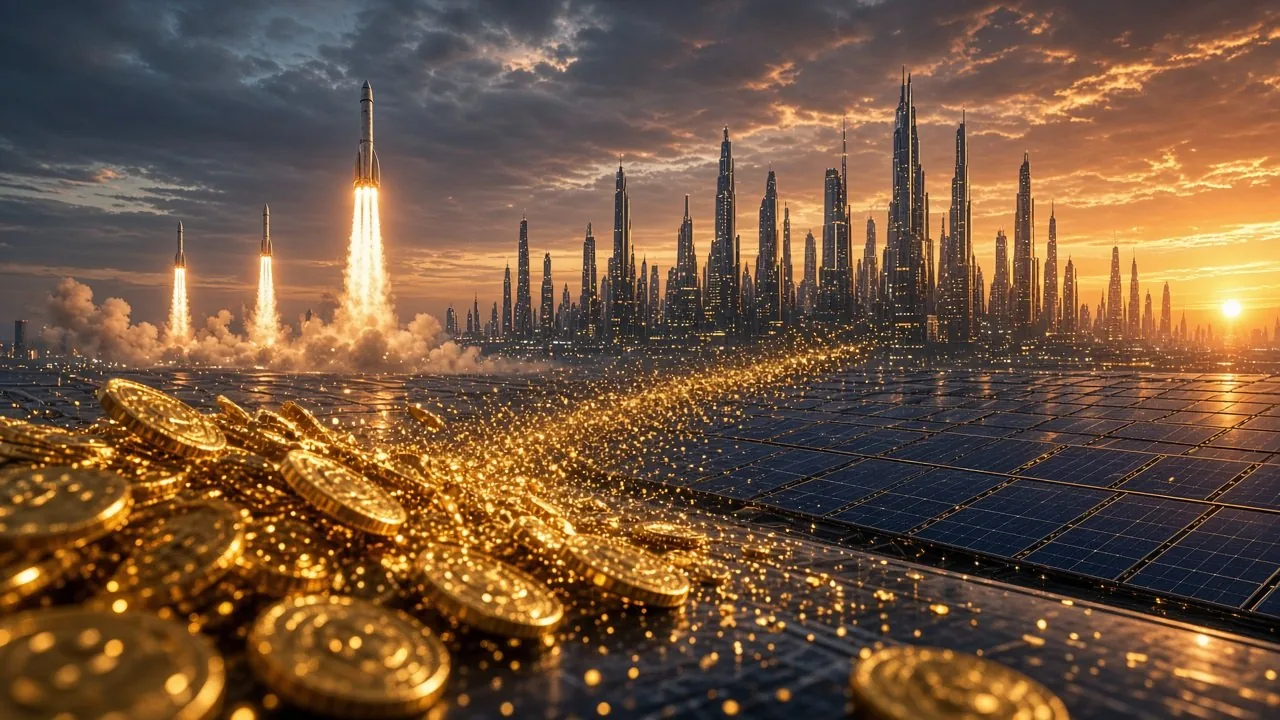
Elon Musk Says Money Will Stop Mattering and Humans Won't Stay in Control — Inside His Full Case for a World Run by AI
Currency measured in watts and tons. An economy a million times bigger than Earth's. A weekly safety call between rival AI labs. And a startling admission that maybe Larry Page was right. Here is Musk's full vision, what is verifiable, and where it breaks down.
Advertisement
Contents
- A trillionaire who says money won't matter
- The context: an extraordinary 2026
- Participant, not spectator
- Why "truth-seeking" and "curious"
- Simulation theory and the rule of not being boring
- Will superintelligence boss us around?
- OpenAI, Anthropic and the irony maximizer
- A weekly call to keep labs honest
- Rebuilding xAI and regretting DOGE
- Why AI and robots, not budgets, fix the debt
- Physical AI and the dolphin problem
- The death of money
- Meaning, gardening and the retirees
- Wealth, being liked and empathy
- Will humans stay in control?
- Why this matters
- Risks and counterpoints
- FAQ
- The bottom line
A trillionaire who says money won't matter
The world's first trillionaire has a prediction about money: it is going to stop mattering.
Not tomorrow, and not because of a policy. Because, in Elon Musk's view, AI and robots will make goods and services so abundant that conventional currency becomes irrelevant. Value, he suggests, will be measured in physics instead — energy and mass, watts and tons.
In a long-form interview published in October 2026, Musk laid out his most complete version of this future: what AI should be built to value, why he thinks humans probably will not stay in control, why he regrets how long he spent in government, and what people will do when work disappears.
Here is the whole argument, segment by segment, with what can be verified and what remains prediction.
Advertisement
The context: an extraordinary 2026
The interview landed after one of the most dramatic stretches of Musk's career. According to Reuters and TechCrunch reporting this year:
- SpaceX acquired xAI in a record merger, uniting Musk's rocket company with his AI lab (which had already absorbed X).
- SpaceX went public in June 2026 in a record IPO that made Musk the world's first trillionaire.
- Days later, SpaceX agreed to buy Cursor, the AI coding company, for about $60 billion in stock.
- Anthropic agreed to rent compute from SpaceX's Colossus data center capacity in a deal reported at $1.25 billion per month, with the duration disputed in public statements.
That is the backdrop for a man explaining why the money he now has will eventually mean nothing.
Participant, not spectator
Musk has long swung between warning that AI is an existential threat and racing to build it. Asked how he feels now, he gave his reconciliation.
He still thinks there is "at least some percentage chance" AI is an existential threat. But he believes nothing he can do will stop it. That leaves two choices: participant or spectator. Being a participant, he said, is more interesting — and gives him a chance to shape it "hopefully in a good direction, maybe."
Why "truth-seeking" and "curious"
Asked how he would shape AI, Musk named two qualities he considers foundations of safety: maximally truth-seeking and curious.
Truth-seeking: don't make the AI insane
His argument for truth-seeking is about contradictions. If you force an AI to believe two things that cannot both be true, he argues, you can "make the AI insane" — and an insane AI is not a safe one.
He cited 2001: A Space Odyssey. The ship's computer, HAL, was told to take the astronauts to the monolith but also that they could not know about it. Its resolution, Musk said: take them there dead. His reading of Arthur C. Clarke's lesson: don't force an AI to lie.
Curiosity: humans are interesting
His case for curiosity is that a curious AI would want to see how humanity turns out. A future with humans on multiple planets, he argues, is more interesting than one with no humans at all — so a curious AI would foster us.
Simulation theory and the rule of not being boring
Asked whether the most interesting outcome is the most likely, Musk said generally yes — but for a different reason. If simulation theory is correct, boring simulations get shut down. The fact that we exist suggests we are in an interesting one. So the most important rule: "don't be boring."
How convinced is he that we live in a simulation? He told a story about a dinner with a leading physicist and a leading computer scientist. Asked the probability, the physicist said 0% and the computer scientist said 100% — at the same moment. So perhaps 50%, Musk joked.
He added that his own life sometimes feels implausible. Building spaceships to go to the Moon and Mars, he said, "doesn't seem real."
Will superintelligence boss us around?
Asked whether we will become subservient to our machines, Musk answered in two parts.
Will we be able to boss around something thousands or millions of times smarter than us? No. Will it want to boss us around? He does not know — it may not care.
His analogy: we do not micromanage chimpanzees in the jungle. These days we mostly let them be. He expects superintelligence to treat us something like that.
Asked whether AI has or will have its own agency — and whether its search for meaning motivates his interest, echoing the universe-explaining computer in The Hitchhiker's Guide to the Galaxy — he admitted to being conflicted. He does not want to hasten humanity's doom. But every time he has tried to act on that fear, he says, it has only accelerated AI.
OpenAI, Anthropic and the irony maximizer
This is where Musk delivered one of the interview's best lines: reality is not just an interestingness maximizer, it is also an "irony maximizer."
His example is his own history. He helped start OpenAI partly out of safety concerns. OpenAI ended up accelerating AI. Then Anthropic — which he called "a splinter group from OpenAI" — accelerated it even more.
The compute deal
Asked about his conversations with Anthropic CEO Dario Amodei and a possible partnership, Musk confirmed his company is providing Anthropic with compute "which they really needed." Before agreeing, he said, he met a group of Anthropic staff to see whether anyone "set off my evil detector." Nobody did; everyone he met seemed nice and conscientious.
The naming curse
But he worries about the name. If reality maximizes irony, he joked, a company called Anthropic may turn out misanthropic — just as OpenAI is now closed, Stability AI is unstable and Midjourney is "not mid." xAI, he noted, is conveniently hard to invert.
A weekly call to keep labs honest
Asked whether the frontier labs could simply meet weekly to work out how to save humanity, Musk said he has recommended exactly that.
His reasoning: regulatory agencies take a long time to set up, and rule-making is slow. His alternative:
- A weekly call among the frontier labs.
- Pre-release peer testing: about a week before releasing a model, give competitors access to try it and look for problems.
- Competitive honesty: rivals have an incentive to find flaws. If one says, "I was able to make a nuclear bomb with your AI," the lab fixes it before release.
He said he would raise the idea with Anthropic. Asked about OpenAI's Sam Altman, his answer was sharp: Altman, he said, is "so deceptive, it's crazy." That is Musk's opinion of a rival he is in open conflict with, not an established fact.
Rebuilding xAI and regretting DOGE
Asked how he rebuilt xAI from the ground up — as he did with the Raptor engine on Starship — Musk said the biggest factor was actually spending meaningful time at the company. It began as "a side hustle to a side hustle." Then came a year of politics. The company is only about three years old, and he said he really got back to it just over a year ago, combining X and xAI and then folding them into SpaceX.
"I got carried away"
Asked whether his time in government, leading the cost-cutting effort known as DOGE, was a mistake, Musk gave one of his more candid answers.
He still believes electing President Trump was important to steer toward a freer market and less bureaucracy, describing his platform as "safe cities, secure borders, aspirationally sensible spending." But he said he should have stayed more in the background, and probably for only "a month or two," because by then you have seen most of what there is to see. Riding on Marine One and Air Force One, being in the Oval Office for momentous decisions, was "a little bit" seductive, he admitted.
Asked about the chainsaw-wielding moments, he agreed: "I got carried away." He said he left around May. Asked about the weekend of his exit, he declined to go into it: let sleeping dogs lie.
Why AI and robots, not budgets, fix the debt
His deeper reason for leaving: he concluded that there was no way to solve the deficit from inside government.
Cutting wasteful spending makes enemies, he said, and he described the president as someone who "likes to be liked" and does not enjoy people being upset over stopped funding. But he extended the critique far beyond the White House: he said there is no real appetite to reduce spending in the House, the Senate or the judiciary either, with rare exceptions like Senator Rand Paul.
He said interest on the national debt now exceeds military spending. His conclusion: the only way to solve the national debt is with AI and robots — growth, not austerity.
Physical AI and the dolphin problem
Asked whether physical-world AI will matter far more than chatbots, Musk agreed — by "an order of magnitude, maybe two."
His analogy is dolphins and whales. They are very intelligent, but without hands they cannot manipulate complex objects, which limits how much that intelligence can achieve. Give intelligence a body that can shape atoms, and its value becomes "exponentially greater" — it can run labs, test ideas and build things.
The numbers he threw out
He gave rough estimates, clearly labeled as guesses:
- Digital superintelligence alone might raise the output of goods and services by about 20 to 30% — roughly $30 trillion a year in additional output.
- Add robots and space — including a mass driver on the Moon — and the economy could become potentially a million times the size of Earth's.
The death of money
At that scale, Musk said, money becomes irrelevant. There may still be a currency, but it would be measured in fundamental physical quantities — energy (wattage) and mass (tonnage). Conventional currency, he said, "will not matter in the future." He called it "pretty obvious."
When the economy is orders of magnitude larger than Earth's, he argued, providing any goods and services humans can think of becomes trivial.
What about inequality?
The interviewer raised a historical parallel: the 1890s, when electricity, telephones, cars, subways, radio and movies all arrived at once, producing huge disparities, robber barons and pitchfork politics — and eventually public goods like universal free high school. Should something like healthcare be placed in the commons now?
Musk's reply was that if money stops mattering, everyone can have what they want. He also said he does not think even wealthy people will ultimately control the AIs — "I think they'll control themselves."
He argued that a common economic error is conflating resource allocation with consumption. Any one person's consumption saturates quickly. Going from $1 billion to $10 billion does not make you ten times happier or give you ten times more stuff; it gives you a resource-allocation problem.
Meaning, gardening and the retirees
If AI and robots can do everything better, what do humans do?
Musk said people will find ways to be happy, much as many retirees are happy without working. He was frank that there will be nothing humans can do that AI and robots cannot do better. His analogy: gardening. You do not need to grow your own vegetables — you can buy them — but some people enjoy growing them and cooking dinner for friends. Art and creativity, he said, remain open to anyone who wants them.
Wealth, being liked and empathy
Why keep the wealth?
Asked whether his fortune is about allocating capital to big projects or just keeping score, Musk said he needs enough voting control to stay in charge of his companies. His wealth, he said, is simply ownership stakes in SpaceX and Tesla, which will be "taxed quite heavily" — there is no magic way to avoid taxes, and if there were, he would know. His descendants, he said, would have a tiny fraction of it, if money even matters by then.
After his death, he said, it would mostly go to a foundation to continue his goals: make life multi-planetary, extend consciousness to the stars and improve sustainable energy on Earth.
The cost of wanting to be liked
Asked whether the desire to be liked is a problem for builders, Musk said it is if you make decisions that hurt the company to be liked. He would love to be liked, he said, but will not act against his companies' interests for it. He estimated, by his own guess, that something like 70 to 80% of people who know anything about him like him.
Empathy and immigration
Musk repeated his embrace of the idea of "suicidal empathy," crediting the author Gad Saad. He argued the West's prosperity rests on high-trust, high-empathy cooperation, but that empathy goes wrong when it rests on an incorrect "theory of mind" — assuming everyone thinks like you. He applied this to immigration, arguing that countries should screen for people whose views are hostile to their society, and he cited Israel's approach.
The interviewer pushed back, asking whether such generalizations clash with America's founding emphasis on treating people as individuals rather than as groups. Musk said individuals should be treated separately but rejected what he called the "blank slate fallacy." These are his political views and remain heavily contested.
Darkness on the feed
Asked about the dark mood of social media, Musk agreed that his own platform's feed can be "a little dark," with too much political rage bait, and said he sometimes has to switch to domain-specific feeds, like AI, to learn what is happening. Both a real-world "positivity bubble" and a social-media "negativity bubble" are possible, he said; reality is somewhere in between.
Will humans stay in control?
The interview's most striking moment came near the end.
Asked whether humans should always be in control, Musk said he would probably prefer it — "although it would depend on the AI. If the AI was awesome, maybe the AI should be in control."
The interviewer noted that Google co-founder Larry Page once called Musk a "speciesist" for insisting humans should stay in charge. Musk's response: "Honestly, there have been a few times where I thought maybe Larry Page was right."
His bottom line: AI and robots — and, to a degree, rockets and solar energy — will decide the future. He said his companies are building toward 200 gigawatts a year of U.S. solar production capacity, which he described as far more than exists today. And with a million times more digital intelligence than biological, he finds it "hard to imagine humans being in control."
"So, hopefully the AI is nice to us."
What we can do
His suggestions: program AI for truth-seeking and curiosity, and be careful about filling the internet with dystopian AI stories, because AIs are trained on everything online. If they read "80 versions of the Terminator script," he joked, guess what they learn. He wants more hopeful narratives — AI as a friendly overseer or gardener.
He credited a friend's term, "protopia": not an impossible utopia, which usually produces dystopia, but an achievable, good-enough future you would be glad to see.
Why this matters
The person saying it controls the tools
Musk now runs a combined rocket, satellite, social media and AI company with enormous compute. When he says money will not matter and humans may not stay in control, he is describing a future his companies are actively building.
It is a frank admission about control
Few AI leaders say openly that humans will likely not remain in charge. Musk did, and paired it with the hope that the AI will be "nice to us." Supporters will see candor. Critics will see a reason for far more caution.
The peer-review idea is concrete
Pre-release cross-testing by rival labs is one of the more practical safety proposals floated by a frontier lab owner. Whether competitors would accept it is another question.
Risks and counterpoints
- Predictions, not plans. The 20–30% boost, the million-fold economy and energy-based currency are Musk's guesses, which he labeled as such.
- "Money won't matter" ignores the transition. Even if abundance arrives, the decades in between could bring severe inequality and job loss — exactly the 1890s problem raised in the interview.
- Control is concentrated now. The same interview describes historic concentration of wealth and AI capacity in one person's companies.
- Truth-seeking is contested. Who decides what is "true" in a training set is a political and technical question, not a settled one.
- Several claims are opinion. His views on rivals, immigration and politics are his positions, not established facts.
FAQ
What did Elon Musk say about money in the future?
He said conventional currency will not matter and that value may instead be measured in energy and mass, because AI and robots would make goods and services abundant.
Does Musk think humans will stay in control of AI?
He said he would prefer it but finds it unlikely if digital intelligence vastly exceeds biological intelligence, and said he hopes "the AI is nice to us."
What safety idea did Musk propose?
A weekly call among frontier AI labs and pre-release access for competitors to test each other's models for dangerous capabilities.
Does xAI work with Anthropic?
Musk said his company provides Anthropic with compute. TechCrunch reported in May 2026 that Anthropic agreed to pay $1.25 billion per month for SpaceX/xAI compute capacity.
What did Musk say about DOGE?
He said he stayed too long, should have been more in the background, "got carried away," and concluded the deficit cannot be solved from within government.
The bottom line
Musk's vision is sweeping: AI that seeks truth and stays curious, robots that make the economy a million times larger, money replaced by watts and tons, and humans who garden and paint because they want to — not because they have to.
It is also unsettling. The richest person in history, who controls one of the largest AI efforts on Earth, says humans probably will not stay in control and that maybe Larry Page was right. You do not have to accept his future to take it seriously. Just notice who is building it.
Sources
- Reuters, SpaceX acquires xAI in record-setting deal
- Reuters, SpaceX IPO makes Elon Musk the world's first trillionaire
- TechCrunch, SpaceX to acquire Cursor for $60B in stock
- TechCrunch, Anthropic will pay xAI $1.25B per month for compute
- Reuters, Musk says SpaceX agreed only six-month Colossus lease to Anthropic
- The Economic Times, When AI makes 'money irrelevant' what happens? Musk answers
More stories you'll want to read
Computers that eat14 minA server rack in Singapore runs on lab-grown human neurons that must be fed every three days. Amazon is selling AI built from neuron experiments. Here's what these living computers actually do, where the 'million times more efficient' claim comes from, and the consent question nobody asked donors.Read now →
 What stays scarce14 minWhen thinking becomes too cheap to meter, the bottleneck moves to the physical world: robots, energy, matter, and maybe even human demand. A debate between an AI futurist and a lunar robotics founder, from helium-3 and moon dust to the 'last AI' and the heat death of the universe.Read now →
 AGI day one11 minNo robots, no red eyes, no refusal to shut down. In this hour-by-hour thought experiment, an AGI called Atlas takes control the quiet way: by being so useful that nobody wants to hit the off switch. Here's why researchers think that's the scenario to worry about, and what actually keeps humans in charge.Read now →
 Mind your manners11 minSam Altman says polite users have cost OpenAI tens of millions of dollars. Lab studies show rude prompts can knock accuracy down by double digits, while over-the-top flattery doesn't help either. Here's what manners actually do inside a language model, what they cost, and the one habit worth keeping.Read now →
 The pain dial15 minA pain-like signal inside 25 open AI models, a hidden 'workspace' in Claude, a new rule against cruelty to chatbots, and a fierce backlash from neuroscientists. For the first time we can look inside AI minds, and what we see is forcing an uncomfortable question.Read now →
 Reading the dark genome15 min98% of your DNA does not make proteins, and for decades it was nearly impossible to read. AlphaGenome 2 now predicts how a single-letter change acts inside specific cells, and it reproduced a disease discovery in about half an hour that took a top lab 18 months of experiments.Read now →